The beautiful part about the world is that it’s extremely diverse. Weird things that are socially unacceptable in one country could be considered beautiful in another.
Physical defects are one of the weird things that some countries consider beautiful. If you have crooked teeth, in some countries you’d be a hot commodity. Do you have really pale skin? Not to worry, there is one country that would love to have you.
Below you will find the top weird things that are considered sexy in various countries.
Scars: In certain African countries like New Guinea, they still decorate their bodies and faces with artistic scars. These scars are usually used to mark milestones for men and women such as puberty and marriage.
veleknez/shutterstock.com
Overweight: In Mauritania, which is in Northwest Africa, if a woman wants to get noticed by a man, she must have a lot of folds on her stomach. In order to make sure they gain the proper weight; families send them to farms where they eat up to 16,000 calories a day, according to Lindsey A. Guerrero, who has spoken about the force-feeding of these young girls.
http://mac.h-cdn.co
Crooked Teeth: A perfect smile in western civilization is a perfectly straight line of teeth. In Japan, perfect teeth are not straight, they’re crooked. Dentists are in high demand for those who want this look.
http://i.dailymail.co.uk
Pale Skin: In various parts of Asia, pale skin is beautiful. When the temperature is hot and the sun is shining, many people will wear masks when they go to the beach to protect their pale skin.
TonyV3112/shutterstock.com
High Foreheads: In the medieval times, women often removed half their hair on the top of their head to have high foreheads. The same custom is done by women in the Fula tribe in Africa.
https://c1.staticflickr.com
Surgical Dressing on the Nose: Some people get rhinoplasty to fix a deformed part of their nose. In Iran, people line up for this procedure to get the dressing put on their nose.
http://exploreplasticsurgery.com
Red Skin & Stretched Lips: In Ethiopia, there is a tribe called the Mursi. The girls stretch their lips with large disks. The larger the disk, the better her social status becomes. The Himba, who live in northwest Namibia, cover their body in red ochre and fat to protect their body from the sun.
Monobrow: In certain areas of Tajikistan, the monobrow is considered a sign of beauty. The locals believe that a monobrow is an indication that a person will be very fortunate in life.
Language is something that we generally take for granted. We seldom wait to think about the origins of the words that we use in our daily conversations or the reason why we use certain words and the phrases the way we do. The world houses thousands of languages that all have interesting attributes and facts behind them. We bring to you 12 of the coolest linguistic facts from languages around the world.
1. Pirahã is a Brazilian language that can be whistled, hummed, or encoded in music.
The Amazonian rainforests house a tribe of indigenous people known as the Pirahã. Their language, Pirahã, is one of the last surviving dialects of the Mura language, the language of the state of Amazonas, Brazil. Even though the language is one of the simplest languages phonologically, there are certain things about the language that would just blow your mind.
The Pirahã language contains one of the smallest phoneme inventories which means that there are very few sound variations in the language. The language also does not contain any words to refer to colors. It just has two words for light and dark.
Another unique feature of the language is that it can be hummed and whistled and can be understood without the use of any physical words. Moreover, according to Daniel Everett a researcher working on the language, vowels and consonants can be removed entirely from the language, and yet the meaning can be communicated to other people through variations in pitch, rhythm, and stress. The tone you use determines the meaning that you wish to convey! The Pirahã mothers have been known to teach the language to the kids by singing the same tunes over and over again.(source)
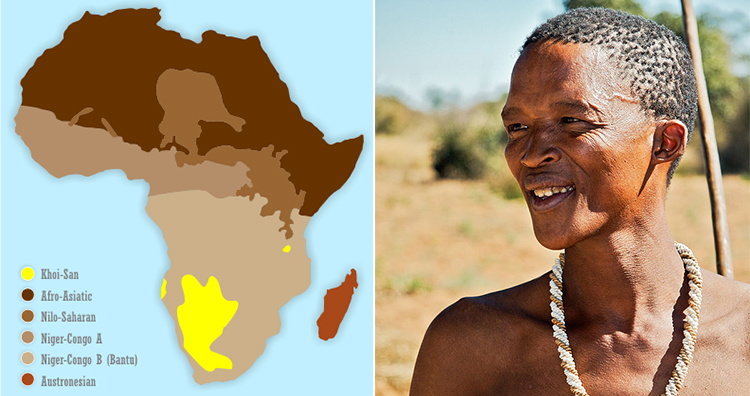
2. There is a language in Africa that only uses five distinct clicking sounds to make up the entire language.
Africa has a number of languages that just consist of click sounds! Known as Khoisan languages, clicks function as normal consonants in these languages. Clicks are distinctive sounds that are made in the mouth via a suction mechanism. This leads to a sharp popping or smacking sound when the tongue touches the roof of the mouth.
Most of these languages consist of just four clicking sounds that can be used to represent the majority of the consonants. Some southern languages use a fifth click, the kiss sound.
Clicks are the initial sounds in about 70% of the words that are part of the Khoisan vocabulary. They offer a bit of dramatic effect during conversations. The uniqueness of these languages has given rise to speculations that maybe the sounds have some kind of special meanings attached to them. But experts believe that that is not the case.(source)
3. The English language consists of words, known as contronyms, that are their own opposites. For example, the word “cleave” has two meanings, i.e. “to cut apart” and “to bind together” which are opposites of each other.
“Contronym” is a word that has multiple meanings in which two of the meanings are completely opposite of each other. Such words are also known as “autantonyms” or “contranyms.” The English language has numerous examples of contronyms. The contronyms might have originated when two different words with different etymologies converged to form a single word or when a single word acquired different and opposite meanings over a span of time. Some contronyms that are commonly used in the English language include “dust“ (verb) which stands for both “to remove dust” and “to sprinkle with soil or dust;” “enjoin” (verb) which stands for both “to prescribe” and “to forbid;” and “ravel” (verb) which stands for both “to tangle” and “to disentangle” threads or fibers.
Apart from English, contronyms can be found in other languages as well. In Latin, “sacer” stands for both “sacred” as well as “accursed.” Also, the Romanian verb a “închiria” means “to rent” as well as “to let.”(source)
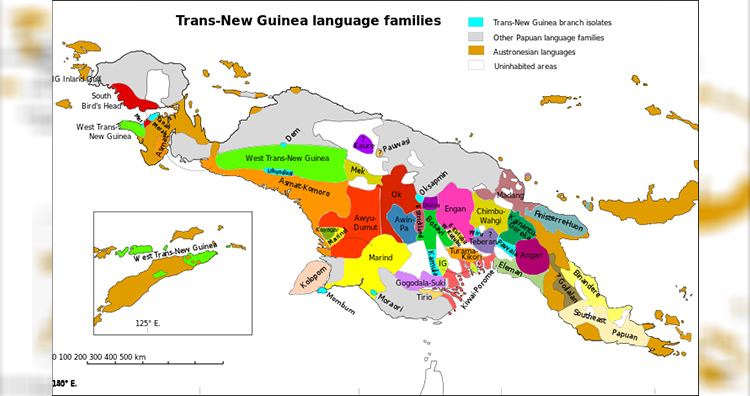
4. Papua New Guinea has over 850 living languages.
Papua New Guinea has over 850 languages that are spoken by the tribes residing there. Mind it, these are not dialects. These are whole languages making Papua New Guinea the most linguistically diverse place on earth. They even have a sign language, Papua New Guinean Sign Language, as one of the four official languages with the other three being Tok Pisin, English, and Hiri Motu. Even though English is an official language, it is spoken by only 1–2% of the population.(source)
5. The word “cliché” was originally an onomatopoeia. It came from the sound that old printing presses made while making copies.
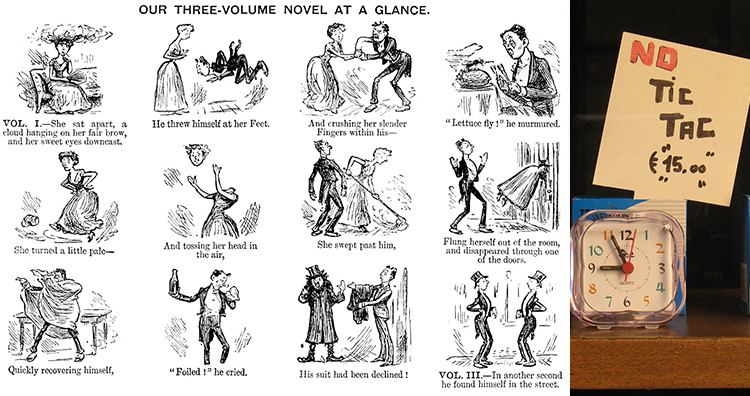
“Onomatopoeia” refers to words that describe or mimic the sound that it describes. For example, the sound of a clock can be expressed as “tick-tock” in English. The origin of the word “cliché” was also onomatopoeic.
“Cliché” originated from the French language. The word was used in reference to printing where it referred to a block that reproduced words or images that would be used repeatedly later during printing. It originated from the clicking sound that the printing machine made while making copies.(source)
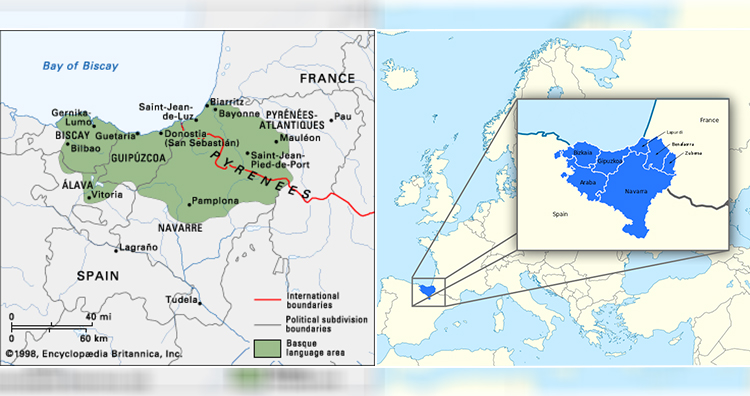
6. Basque is a language isolate. This means that the language is not related to any other known living language even though it is spoken in the region between France and Spain.
Basque is a language native to the people who reside in the Basque country, a region that lies between the borders of France and Spain on the Atlantic coast. What’s unique about the language is that linguistically, Basque is not related to any language of Europe nor to any other known living language that exists in the world.
Basque is the last remaining language among numerous languages that were spoken in southwestern Europe before the region was Romanized in the 2nd century BCE. According to some statistics, Basque speakers can be found in other parts of Europe as well as the Americas. These speakers are majorly bilingual and are said to be approaching a million in the 21st century.(source)
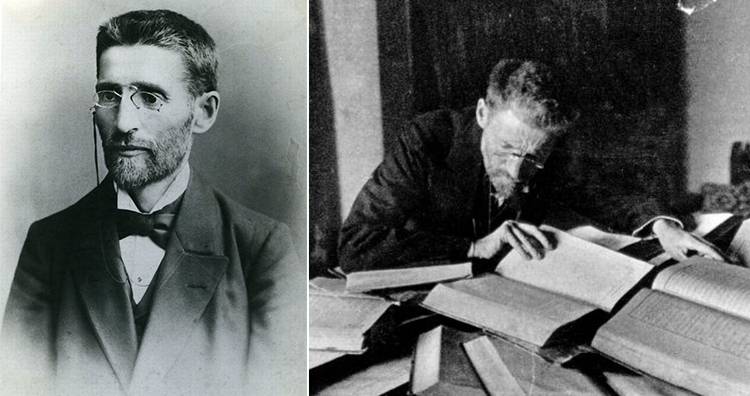
7. Hebrew died as a spoken, native language around 200 CE. It was later revived on 13 October 1881 in Paris when a man named Eliezer Ben-Yehuda and his friends agreed to exclusively speak Hebrew in their conversations.
The Biblical language Hebrew was spoken some 3,000-3,500 years ago. Once upon a time, it was a language spoken by many. But after the Bar Kohba War of 135 CE, Hebrew slowly started declining as a native, spoken language, even though it was still used for writing for many centuries thereafter.
It was on October 13th, 1881 that the language was once again revived by a group of friends. Eliezer Ben-Yehuda and his friends made a pact to only converse in Hebrew. The credit goes to Eliezer for reviving the language after so many years. Eliezer started learning Hebrew when he was just three years old. When Jewish nationalism gained popularity in 19th century Europe, Eliezer became fascinated with Zionism. He also became acquainted with the concept that speaking a common language is a criterion to define a nation worthy of national rights. This gave Eliezer the idea that reviving the Hebrew language would help to unify Jews worldwide.
Eliezer has had a major contribution to the establishment of the Committee of the Hebrew Language which later became the Academy of the Hebrew Language. He also wrote the first Modern Hebrew dictionary.
As of today, Hebrew is spoken by more than 5 million people as their native language and is the national language of the State of Israel.(source)
8. Mbabaram is an extinct Australian language in which the word for dog is “dog.” There is no relation between these words, and this is a pure coincidence.
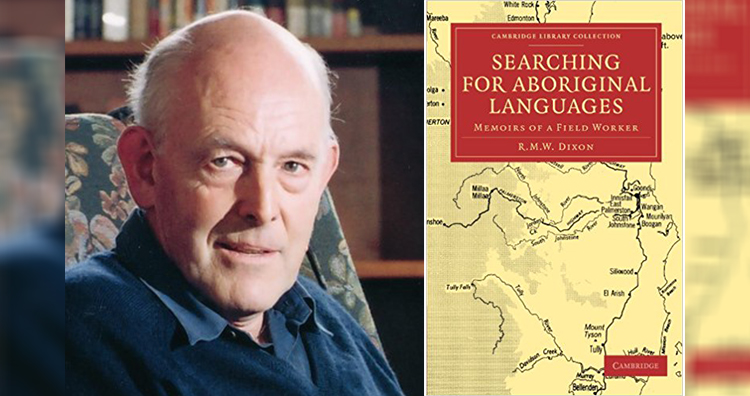
Prof R. M. W. Dixon, Book Cover – Searching for Aboriginal Languages – Memoirs of a Field Worker. Image source: research.jcu.edu.au, amazon.com
Mbabaram was the traditional language of the Mbabaram tribe and is an extinct Australian Aboriginal language. The language is quite famous in linguistic circles because of a striking similarity that it has with an English word.
R. M. W. Dixon, author for Searching for Aboriginal Languages: Memoirs of a Field Worker and a researcher of the language, began studying the language by extracting a few nouns. One of the nouns was the word for “dog.” He discovered that the Mbabaram word for dog was in fact “dog,” and it was pronounced almost identical to the English word. But this is a pure coincidence. There is no relationship between the two languages.(source)
9. Before the English-speaking community was introduced to the fruit, the color orange was referred to as “geoluhread” which stood for red-yellow in Old English.
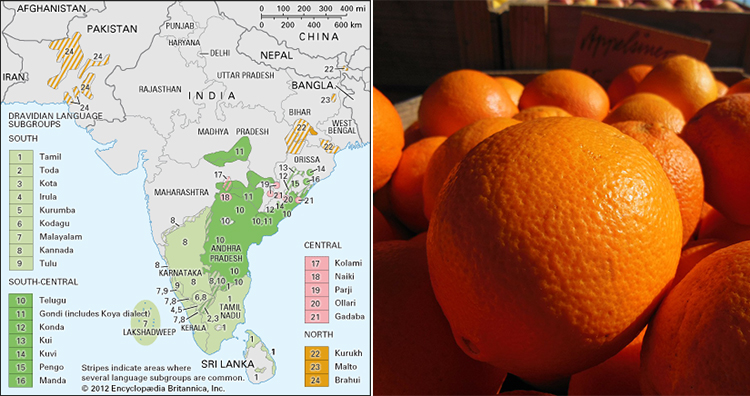
There was no orange color in English before the English-speaking people came to know of the existence of the fruit orange. The word is known to be a derivative of a Dravidian language, possibly Tamil, and it was passed through numerous other languages such as Sanskrit and Old French. Finally, it reached the English language. The earliest recorded use of the word “orange” in English was in the 13th century when it referred to the fruit. It was only in the 16th century that the word was used to refer to the color.
Before the fruit was introduced to English speakers, the color orange was known as “geoluhread.” It meant red-yellow in Old English.(source)
10. People who communicate via American Sign Language can have accents just as they would in a spoken language.
A research at the University of Pennsylvania discovered that people who converse via American Sign Language (ASL) have an accent of their own similar to people who speak the language. There was a comparison made between the ASL used by people in Philadelphia and the standard ASL. It was found that many of the words were exceptionally different when compared with standard ASL guidelines. The Philadelphia sign language was found to resemble French more than standard ASL.
People who use sign language have accents that vary depending on their age, ethnicity, and whether they are able to somewhat hear or are completely deaf. It has also been observed that the speed in which they deliver the conversation also differs. People using sign language in New York are fast talkers whereas those in Ohio were slow and relaxed. Moreover, people belonging to the southern states of United States tend to touch their lower face and chest when they communicate with sign language, and that has become a distinct regional accent.(source)
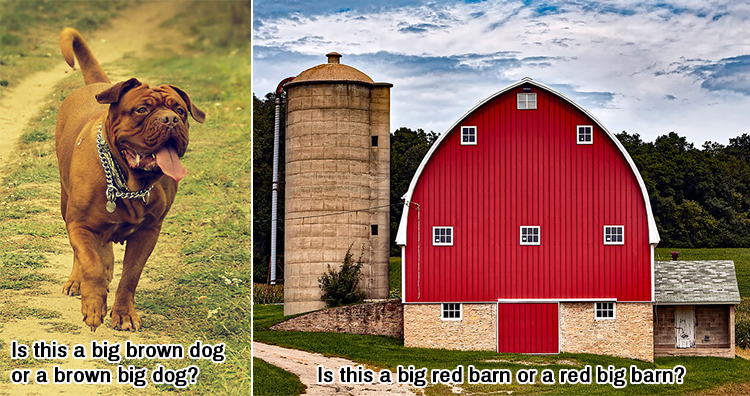
11. The English language has an order in which adjectives go and it sounds wrong if the adjectives are not in that order. For example: “loose red top” vs. “red loose top.”
Image credits: Pixabay, Pixabay
Let’s say it is a warm sunny day and you were roaming outside with your friends wearing a red loose top. Does the sentence sound wrong to you? Should it be “loose red top” instead of “red loose top?” It should be, shouldn’t it?
There is a code that governs the order in which English speakers use adjectives in their sentences. Nobody is taught the order. It is mostly based on the intuition that makes the sentence sound wrong if the adjectives are used in the wrong order.
Such problems generally arise when the border between adjectives for size and color disappears. Linguists have determined a code for such instances that goes as follows: general opinion, then specific opinion, then size, then shape, then age, then color, then provenance, then material (GSSSACPM). Studies have shown and confirmed that GSSSACPM is consistent in most of the instances of written English. In 2003, Stephanie Wulff used a computer program to go through thousands of texts and found out that 78% of the strings of adjectives followed the GSSSACPM code.
So, now, you decide whether this is a cool informative fact or an informative cool fact?(source)
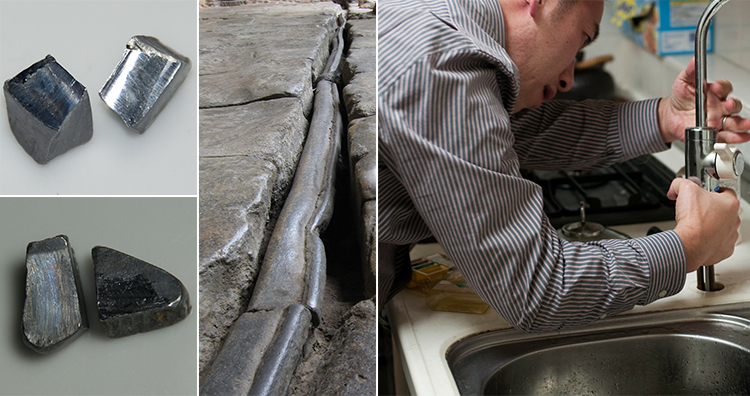
12. The word “plumbing” originates from the Latin word for lead, “plumbum,” which is what most pipes were made of at the time.
The concept of plumbing has been prevalent since the ancient Roman, Greek, Indian, Persian, and Chinese civilizations. These civilizations had public baths and they needed to offer flowing water and wastewater removal systems in the baths. They used pipes that were made of lead.
The scientific name for the element lead is plumbum and its symbol is Pb. This is where the word “plumbing” came from. The word “plumber” also originated during this time.(source)
The reality is often stranger than the fiction. When we try to understand a fact that we consider fake, the universe reveals its crazy truth, and we are left gaping. Sometimes we come to know about certain facts which sound too crazy to be true. Some of these bogus sounding facts are actually completely true. Here we have compiled a list of facts which sound completely fake but are actually true.
1. Oxford University was founded before the Aztec Empire.
In history, there is no proof of the foundation of Oxford University. But, the record shows that teaching in some form had begun in the university by 1096. It started developing rapidly and became popular in 1167 when Henry II restricted the entry of English students in University of Paris.
Before 1200, the Aztecs were a nomadic tribe. Hence, the foundation of Aztec civilization is dated 20 June 1325 because this is the day when the capital of Aztec Empire, Tenochtitlan, was founded. In 1521, Spanish conquistador Hernán Cortés de Monroy y Pizarro captured Tenochtitlan and brought an end to the Aztec civilization. Thus, the beginning and end of Aztec civilization were within the timeline of Oxford University.(source)
2. A woman’s uterus can fall out of her vagina if the muscles are too weak.
Uterine Prolapse is a medical condition in women in which the uterus falls out of the vagina. It happens when the muscles and ligaments holding the vagina in place becomes weak. In a woman’s body, there is a small muscular band in the pelvic region which closes the opening of the vagina. The ligaments hold up the walls of vagina and uterus and also prevent their downward descent. These muscles and ligaments become weak due to various factors such as childbirth, age, chronic coughing, obesity etc. This causes damage to the pelvic floor which results in uterine prolapse.(source)
3. If you have two arms, then you have more arms than the average person.
Each year a number of people lose one or both hand in an accident or in a war. This led to the derivation of the mathematical fact that if a person has two arms then that person has more arms than the average person. Surprised? Go on.
Let’s prove it mathematically.
Imagine a town with 1000 people. Out of the 1000 people, one person has one hand. Thus, the total number of hands in town becomes 1999.
Consequently, the average number of arms per person in that town is 1999/1000 = 1.99 which is less than 2.
This proves the fact that a person with two arms has more arms than the average person.(source)
4. The driest place on Earth has seen no rain for nearly 2 million years.
When people asks where the driest place on Earth is, our mind immediately starts juggling between the names of deserts. Yet, surprisingly the driest place on the Earth is in Antarctica. The place is called Dry Valleys and it hasn’t seen any rain for nearly 2 million years. The net gain of water in this region is zero. Lake Bonney in the Dry Valleys is covered with 3 to 5 meters of ice permanently and mummified bodies of seals have been found around this lake.
The Dry Valleys spreads over an area of 4800 square kilometers and there is almost no ice, water or snow. There is no precipitation and rain in Dry Valley. The reason behind the lack of rain is the Katabatic winds. The katabatic winds flow from the mountains and are laden with moisture. It becomes so heavy with moisture that it is pulled down due to gravity and hence it cannot reach the valley.(source)
5. An avocado has as twice the potassium as a banana.
Most people know that banana is one of the richest sources of potassium. In reality, an avocado has a twice amount of potassium than that found in a banana. Avocado is also a rich source of Vitamin K. Consuming one avocado a day will fulfill one-third of our daily Vitamin K requirement. Avocado also contains Vitamin B6, Vitamin C, folic acid, and pantothenic acid.
Avocado is considered as the super-food because it helps to prevent cancer, improves eyesight, develops fertility, and aids in weight loss.(source)
6. More people are killed by cows than sharks every year.
Cows are known universally as a domestic animal. Hence, words like aggressive and deadly beast are used for tigers, bulls, crocodile or sharks, but almost never for cows. However, data have shown that every year people killed by cows are far more than people killed by sharks. In July 1916, sharks attacked 5 people in 12 days and four of them died. In 2009, the same number of people were killed by cows in Britain alone.
Surprisingly most cow attacks are deliberate attacks and made in groups. During group attack, cows gather in a circle facing outward. They lower their head while stamping on the ground. The leader initiates the attack and rest of the group follows. Cows often target people walking with dogs. They become agitated by the quick movement of dog and attacks them. When people are walking their dog, the cows are likely to assault them. Cows are known to attack motorist, small truck or even people passing nearby them.(source)
7. Stainless steel will remove the scent of onions, garlic, and fish from your skin.
Garlic, when added to recipes in a right amount can make a dish taste heavenly. But, those who use raw garlic in the kitchen know the strong odor it produces. Once you have got garlic odor on your hand, it remains there for a long time as the stench is quite strong. Those who use garlic regularly use a very simple trick to remove the odor. The trick is rubbing our hands on the surface of stainless steel.
Using this idea, some companies have started making stainless steel bar in the shape of soap. The reason why stainless steel helps in removing the garlic odor so effectively is because of the high content of sulfur in garlic. When we cut garlic, these sulfur molecules get transferred into our hands. But, when we touch the surface of stainless steel, the sulfur molecules bind with the steel molecules and get transferred on its surface along with the smell. Voila! no more sulfur, no more smell.(source)
8. Your smartphone has more germs than a toilet seat.
Remember the last time you used your smartphone? The answer is probably going to be seconds ago. Our life has become so much dependent on smartphones that we need it in every phase of our life. Routine swab tests of these smartphones have revealed that the level of germs found on smartphone surpasses that of a toilet seat. Hence, we are basically in a constant contact with an object that is a lot more unhygienic than a toilet seat.
The level of germs on our smartphone increases when we handle it with the same hand with which we have handled food. It also increases when smartphones become our companion in the toilet. Some people do not wash their hands regularly and it affects the germ count on smartphones. To prevent germs from residing on our phones, we must wipe it regularly with antibacterial wipes instead of your shirt sleeve or dry cloth. Also, if you are using a phone while eating then tip it upside down and shake it to remove food crumbs.(source)
Till now you must have thought that the more you sweat, the more fat you will lose. Advertisements of weight loss products claim that the sweat coming out of your body is actually fat which broke down due to physical activities. Even doctors claim that our fat is transformed into heat or energy when we exercise. However, a research team from UNSW Sydney has proved it wrong by revealing what really happens to fat loss from the body. They revealed that we actually breathe out (exhale) our body fat.
Their study has proved that about 10 kg of fat is turned into 8.4 kg of carbon dioxide, which is released from the body in the form of exhaled air, and 1.6 kg of water, which is excreted through urine, tears or sweat. The result published claims that we need to inhale 29 kg of oxygen to breakdown 10 kg of fat in our body. It will create 28 kg of carbon dioxide and 11 kg of water which can be excreted from the body.(source)
10. In 1919, a flood of molasses killed 21 people in Boston.
On January 15, 1919, in Boston, Massachusetts, US, a large storage tank containing molasses burst and caused a flood of molasses flowing through the streets. It moved at 35 mph and the wave was 8 m at the peak. It led to the death of 21 people and 150 more were injured. This disaster is popularly known as Great Boston Molasses Flood. It is also known as Great Molasses Flood or Boston Molasses Disaster. This Molasses flood was so disastrous that it even swept buildings off their foundations and it was waist deep for several blocks.
It was cleaned up by 300 people using salt water and sand. The molasses flood later entered into folklore and the residents of that area claim that they can still smell molasses on hot summer days.(source)
11. A dolphin once committed suicide after he fell in love with a researcher.
Peter, a bottlenose dolphin, met the research assistant Margaret Howe in 1965. It was a part of NASA experiment for which Howe had to teach Peter to speak through a blowhole. For this experiment, Howe and Peter did everything together such as eating, sleeping, playing, and bathing. Peter was 6 years old at that time and was “sexually coming of age”, so he fell in love with his teacher.
When the experiment ended, Peter was shipped to Miami, away from Howe. In Miami, Peter’s health deteriorated quickly. A few weeks later, Peter committed suicide and his veterinarian stated that the cause of his death is a heartbreak which occurred when Howe left Peter.(source)
12. There is a planet “Gliese 436b”, which is covered in burning ice.
Note: Image is just for representation purpose only. Image source
In 2007 an exoplanet named Gliese 436b was discovered. It orbits the red dwarf Gliese 436 and its size is the same as planet Neptune. The temperature of this planet is 712 K (439 degrees C) which indicates that this planet is very close to its star. This high temperature indicates that water in any form could not exist on its surface. But, this planet breaks all rules by being covered in ice, solid ice. This exotic form of water ice is known as “Ice-x” which covers a rocky core. This ice is unlike any other as it can remain solid even during the super hot temperature of 439 degrees. The immense gravity of this planet compresses the water molecules and turns it into ice. Its extreme gravity also prevents the ice from turning back into liquid form. (1,2)
13. Can openers weren’t invented until 48 years after the invention of cans.
Up till the 1800s, Canned foods didn’t exist. In 1795, Napoleon Bonaparte was having problems with food preservation due to which his troops were not getting adequate food. Consequently, he offered a prize for anyone who could bring forward a method of preserving food during long journeys. Nicholas Appert won this prize in 1810 by sterilizing food in a glass jar container. Later in the same year, Peter Durand made the world’s first iron and tin can.
Combining the sterilization process and the iron and tin can, the food was kept fresh for a long time. However, there was no can opener available. Hence, troops used to smash the tin can with a hammer and chisel. Almost half a century later, in 1858, Ezra Warner invented and patented the world’s first can opener.(source)
Hard to imagine, isn’t it? But it’s true. Sharks are older than trees. The earliest known species of tree is Archaeopteris. It was a tree like a plant and its leaves were like a fern. It is extinct now. Fossil index has revealed that it used to exist on Earth about 350 million years ago in a forest in the area where Sahara desert is located at present. Amazingly, the fossil index of sharks has revealed that it was present on even 400 million years ago proving the fact that sharks are older than trees.(source)
Tomatoes are such an integral part of every Italian recipe that in a way Italy and tomatoes are synonymous. But, until 1548, there had been no tomato in Italy. Not only in Italy, but they were unknown for the whole Europe. It came to Italy through explorers who brought tomatoes with them from the New World. The color of tomatoes which they brought was not bright red like the one we have today. They were yellow and their size was similar to cherry tomatoes.
If you are wondering what the tomato loving Italians had used to eat before 1548, well they consumed olives, pasta, polenta, anchovies, beans, pork, and basically everything they consume now. The only difference is that none of them were served with a rich tomato sauce as the base.(1,2)
16. Polar bear fur is actually transparent and their skin is black.
Ask anyone what is the color of Polar bears and you will receive the answer “white”. But, the truth is Polar bears are not white. They have transparent fur and underneath the fur, their skin is black in color. Their white color is actually an optical illusion going on within their fur/hair.
A Polar bear’s coat is actually made of two layers of hair. One is guard hair which is 5-15 cm in length and the other is a thick undercoat of shorter hair. The guard hair is transparent. When sunlight falls on the guard hair, some light energy gets trapped in it and bounces within the hollow hair. This causes emission of white light and the process is known as luminescence. The luminescence helps Polar bear in blending with the white snow.(source)
17. There are more trees on Earth than there are stars in the Milky Way galaxy.
Most people would dismiss this fact as false because most people consider that total number of stars is not countable and incomparable. According to Maggie Masetti, who is an education and outreach specialist in NASA, there are 100 billion to 400 billion stars in our Milky Way Galaxy. In the September 2015 issue of scientific journal Nature, a paper titled “Mapping tree density at the global scale” was published. It provided an estimate of a total number of trees on the Earth. According to this paper, there are approximately 3.04 trillion trees on Earth. Even though both these studies provided approximate numbers, it shows that the number of trees on Earth is more than the stars present in Milky Way Galaxy. Therefore, until the time someone comes up with a way to calculate the exact number of stars and trees, it seems that trees will be more in number.(source)
When you look at the history of the bicycle, the first two-wheeler used by humans was the Draisine which was invented and patented in February 1818 by Karl Drais of Germany. On the other hand, rail transport might date back to the ancient Greeks. The first mechanized railroad system, i.e the steam engine, was started in England in the 1820s. Before the steam engines, wagonways were used in mining. Thus, surprisingly men knew how to drive a rail engine before being able to balance himself on two wheeler.(1,2)
Templatesyard is a blogger resources site is a provider of high quality blogger template with premium looking layout and robust design. The main mission of templatesyard is to provide the best quality blogger templates which are professionally designed and perfectlly seo optimized to deliver best result for your blog.








 Hello, my name is Jack Sparrow. I'm a 50 year old self-employed Pirate from the Caribbean.
Socialize