Hulda Regehr Clark has proved to be a polarizing figure among the medical fraternity and the ailing patients. She has been hailed for her “cures” by the patients while being reviled by the practitioners of alternative medicine as a fraud while victims and relatives of victims who have been robbed of their money and their health and sometimes of their life itself consider her as a woman who “preyed” on the hopes of the victims by promising them a miracle cure.
Hulda Regehr Clark (1928-2009) was a naturopath, an author and a practitioner of alternative medicine who claimed all diseases were caused by parasitic infections.
Hulda Regehr Clark studied biology at the University of Saskatchewan and her doctorate from the University of Minnesota. While her bio sketch states that she procured her doctorate in physiology, the Register of Ph.D. degrees conferred by the University of Minnesota states that she received her degree in Zoology. She also listed a Naturopathic degree from now-defunct Clayton College of Natural Health.
Clark famously claimed that all diseases, including HIV/Aids and all forms of cancer were due to Parasites and that they could be cured by “zapping”the parasites with the electrical devices she marketed. Clark has written several books on this subject and has operated numerous clinics in the United States. A string of legal difficulties and a robust investigation by the Federal Trade Commission saw her fleeing to Tijuana, Mexico, where she ran the infamous Century Nutrition clinic.
Depressionis a serious issue and it has long been studied by universities and colleges but the exact cause of depression is still to be determined. According to the World Health Organization, an estimated 350 million people around the world suffer from depression. A guest writer at the Huffington Post named Johann Hari described the potential deeper causes of depression
The story begins with Dr. Vincent Felitti’s clinic in the 1980’s. His practice was known to be one of the last places for extremely obese people to visit. His office was long regarded as the place for people in the most severe stages of obesity. Within his program, many people were able to shed incredible amounts of weight and regain a healthy lifestyle. But he noticed that the people who lost the most weight very often went into a ‘brutal depression, or panic, or rage. Some of them [even] became suicidal.’
Dr. Felitti couldn’t understand the problem until he spoke to a 28-year-old woman. In less than a year, 51 weeks, the woman went from a whopping 408 pounds to 132 pounds. But suddenly, she put on over 40 pounds in a couple of weeks and before long she regained all her weight back and was above 400 pounds once again. When Dr. Felitti talked to her, she said that when she was obese, men wouldn’t be interested in her but after she lost all that weight, she began to incur the interest of the opposite sex and being unaccustomed to the attention, she would flee from the interaction and gorge herself on food.
As the conversation unraveled, Dr. Felitti asked the woman when she began to compulsively eat and the woman said at the age of 11. When Dr. Felitti began to probe, he found out that this was the age when her grandfather began molesting her.
Dr. Felitti later found out that of the 183 people in his program, 55 percent of the people there had been sexually abused as a kid. One woman said: ‘overweight is overlooked, and that’s the way I need to be.’ Dr. Felitti said: ‘what we had perceived as the problem ― major obesity ― was in fact, very frequently, the solution to problems that the rest of us knew nothing about.’
This prompted Dr. Felitti to launch a research program that was funded by the Centers For Disease Control and Prevention. He discovered that there was a direct correlation between childhood trauma and the risk of adult depression. If a child had seven categories of traumatic events then they were 3,100 percent more likely to commit suicide as an adult! (With an additional 4,000 percent higher chance of being an injecting drug user.)
But the research found out that just by discussing the childhood trauma there could be a huge reduction in medical care. Johann Hari wrote for the Huffington Post, saying: ‘Just being able to discuss the trauma led to a huge fall in future illnesses ― there was a 35-percent reduction in their need for medical care over the following year. For the people who were referred to more extensive help, there was a fall of more than 50 percent.’ And, as Dr. Robert Anda put it: ‘it’s time to stop asking what’s wrong with them and time to start asking what happened to them.’
No one can predict with 100% certainty about what will happen the very next moment. Life often throws unexpected twists and turns in our way. But this doesn’t mean we should remain ignorant and just wait for a difficult situation to present itself. Instead, we can be prepared so that we can save our self and others even in the worst situations. So, here we have brought to you 10 trivial facts that might save your life one day.
Vinegar has strong antibacterial properties and can work against several foodborne pathogens. It is also effective in the treatment of skin burns.
Vinegar is an essential cooking and pickling ingredient that we can easily find in our kitchen pantry. Apart from imparting flavor to the food, vinegar has some other very useful qualities. It contains acetic acid which is formed during fermentation of ethanol. Acetic acid is helpful in inhibiting the growth of bacteria and some other pathogens in food. Mycobacterium, a pathogen responsible for causing diseases like tuberculosis and leprosy, can be killed by the acetic acid in vinegar. It is also effective against Clostridium botulinum (causes Flaccid paralysis), Salmonella (causes typhoid), Listeria (causes listeriosis), Staphylococcus (causes food poisoning), and some varieties of E. coli.
Vinegar, when diluted in cold water, can be used to treat skin burns caused by chemicals. When applied as a compress, vinegar lessens the pain and also heals the wound faster. Due to its acidic nature, white vinegar proves to be a great cleaning agent for household items. Washing fruits and vegetables in vinegar can effectively kill the bacteria and mold on them.
Another interesting use of vinegar: it can lessen the pain of jellyfish stings. But do not apply vinegar if you have been stung by a Portuguese man o’ war, as it makes the pain worse.(1,2,3)
Pine resin is a natural antiseptic and can be used to treat wounds in the wild. It can also remove splinters.
If you want to know what a pine resin is, then just make a deep scratch on the bark of pine tree. The sap that comes out of the scratch is pine resin. Resins secreted by plants and trees are their own physical and chemical defensive barrier. It protects the tree from insects and pathogens which can affect the plant. What makes the pine resin special is that it is also effective on human-disease-causing-pathogens. Hence, pine resin acts as a natural antiseptic.
Pine resin, when applied on wounds, staunch the flow of blood. Its antimicrobial and anti-fungal properties can keep the germs out of the wound. Pine resin is also useful in extracting splinters. To take out a splinter, just put some pine resin on the skin and leave it for a day or two. The splinter will come out on its own.
Among other pine trees, the most valuable medicinal pine is the eastern white pine. Its inner bark and resin can cure coughs, laryngitis, bronchitis, and chest congestion.(1,2,3,4)
If you see a photo of anyone where they only have one “red eye” from the flash, this could be a sign of retinoblastoma, a type of eye cancer.
Retinoblastoma is a rare type of eye cancer that mostly affects young children. With timely treatment, it can be cured, but there remains a chance that the child might lose vision in the affected eye(s). In a severe case, there might be a need to remove the eye completely. It is best to detect retinoblastoma as early as possible.
Retinoblastoma can be detected by noticing an abnormality in a child’s pupil. The pupil of a child suffering from retinoblastoma will appear whitish in bright light. Another way to notice it is through photographs. To detect through photographs, look at the eye of the child in the photo. If one of the eyes shows a red pigment while the other one looks normal, then the child should be taken for a medical diagnosis as soon as possible.(1,2)
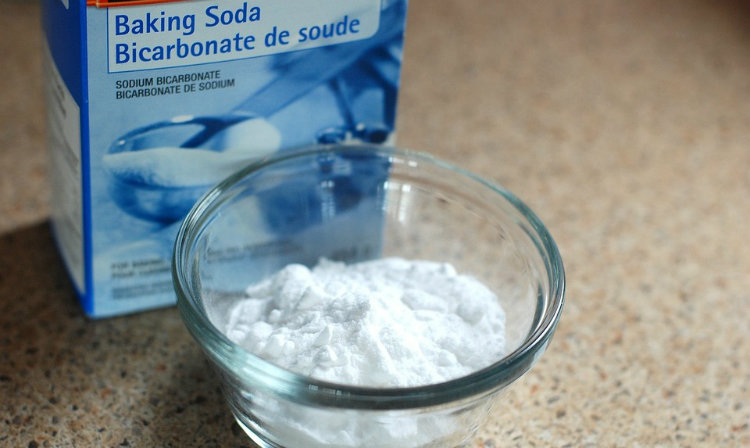
Baking soda can be used to put out a cooking fire and other small fires.
It just takes a few minutes of inattention to start a kitchen fire. You are cooking in the kitchen, and suddenly the baby starts crying. You run to attend the baby, and it takes longer then you anticipated. Meanwhile, the unattended food on the stove catches fire. So, what should you do next? The best option would be to use a dry-chemical fire extinguisher. But in case you don’t have a fire extinguisher, then what? Water? No, definitely not! Water is ineffective against a fire caused by grease in the food. When water is thrown on a grease fire, it spreads the flames instead of controlling them.
The next best option would be your humble kitchen ingredient, baking soda. Pour lots of baking soda over the fire if it is just in its initial stage. But baking soda can only put off small kitchen fires. So, if the flames of your kitchen fire really get high, it’s best to call 911.(source)
A gray ring around the edge of cornea is an indication of high level of cholesterol in the blood.
Next time you are looking in the eyes of your loved ones, look closely. Is there a gray ring surrounding the edge of the cornea? If yes, then the person might be suffering from high cholesterol and triglycerides. Both these conditions increase the risk of heart attack and stroke.
In medical terms, the gray ring around cornea is known as “arcus senilis.” It begins as an arc and soon develops into a full ring. It is common in people above the age of 60, but might also happen to younger people. In older people, i.e. people above the age of 60, it is natural to have the grey ring and it does not affect vision. But if it occurs in a younger person, it is a sign of disturbance in lipid metabolism. It may indicate conditions such as hypercholesterolemia, hyperlipoproteinemia, or hyperlipidemia which can be life threatening if left untreated.(1,2,3)
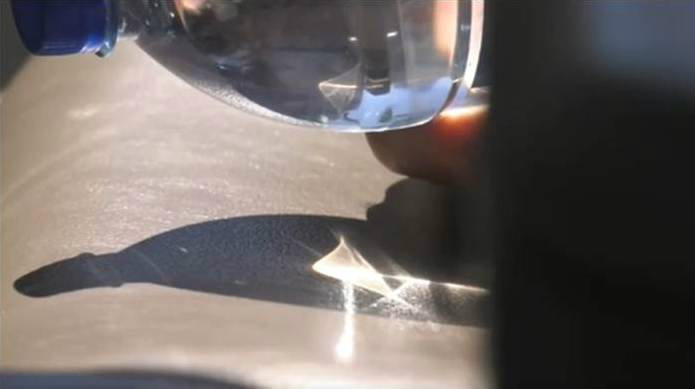
Keeping transparent water bottles in your car can cause fire if sunlight passes through them.
Image Credit: Facebook / Idaho Power via www.today.com
Its a very basic thing to keep water bottles in car. But this normal act can potentially burn down your car, especially if your car is parked in direct sunlight. When sunlight passes through a transparent water bottle, the water, along with the shape of the bottle, acts as convex lens. It concentrates the energy of the sunlight and focuses it onto a single point. When the point where sunlight is concentrated gets hot enough, it can start a fire.
This phenomenon works on the same principle as passing sunlight through a magnifying glass. In our childhood, all of us have tried at least once to catch dry leaves or paper on fire by concentrating sunlight on them through a magnifying glass. The same principle works with transparent water bottles kept in your car.(1,2)
If someone is holding you hostage and there is a police officer present on the scene, try to keep yourself away from the assailant’s head.
Being held hostage is an extremely terrifying feeling, especially if the person is pointing a gun at your head. If police officers are also are present, try to keep calm and do not scream or talk with the assailant. This will help you and the assailant in listening and following the orders of the police officers.
The next thing you should do is to keep yourself as far away as possible from the assailant’s head. This is because, during an encounter, the police usually target a triangular portion of the criminal’s face. The triangle runs from the outside corners of both eyes down to the bottom of their nasal septum. When a bullet is fired at this area, it has a better chance of killing the person immediately without even a finch reflex. If the police are forced to use firearms, the officers would prioritize this triangular area as their target. So, if you don’t want to be the accidental target of the bullets, keep yourself away from the assailant’s head.(source)
After saving someone from drowning, take them to a hospital as the bacteria in their lungs can kill them.
What do you usually do after saving someone from drowning? Feel relieved and then get busy with your own work? Well, you shouldn’t. That’s because there is a chance that even after being saved from drowning, a person might die. This kind of death is called “secondary drowning” or “dry drowning.” It can occur even 48 – 72 hours after exposure to water.
Secondary drowning occurs when a drowning person inhales water. According to medical science, if a person inhales about six tablespoon of water, it can cause secondary drowning. So, even if you have saved someone from the water, it’s best to seek immediate medical help.(source)
If you’re in a situation where you have no water source, try your best not to eat food as it increases thirst.
Salt is an integral part of our food. When the food reaches the digestive system, the salt in the food is absorbed into the bloodstream present in the walls of the small intestine, making the blood saltier than before. This salty blood then gets circulated through our body, and soon the fluids outside the body cells becomes saltier than the fluids inside the cells. The salty fluid outside the cell tries to extract the water inside the cell so that it can maintain the balance. But at the same time, the cells try to withhold water. As a result, our cells send a chemical signal to the brain asking for more water, and we began feeling thirsty. So, in case you want to avoid getting thirsty, try to control your hunger.(source)
You should never put your feet up on a car’s dashboard. Airbags go off like small bombs, and they can break both of your legs.
While on a long drive we often prefer relaxing with our feet on the dashboard. This seemingly innocent act may cost you your legs. This situation can be best explained by an incident that occurred in 2017.
In August 2017, Audra Tatum, her husband, and her daughter were travelling in a car. Audra’s husband was driving and she was sitting in the passenger seat next to him. Their daughter was sitting in the back seat. Audra was sitting with her legs crossed and had put them on the dashboard. Suddenly a car came and crashed into their car. The airbags deployed and in a moment Audra’s foot was thrown up breaking her nose. The impact left her right leg broken. Her femur was broken into four pieces, and even her arm broke as she tried to stop the impact.(1,2)
Urban medical myths and old wives’ tales have been under the microscope for a long time now. But there are some myths that never leave no matter how many times they have been debunked. Myths related to medical or health are often repeated as facts. People just do not wish to take the risks they imply. A simple, diligent Google can easily reveal the truth behind these fallacies. From drinking eight glasses of water a day to staying awake during a concussion, we bring you 10 such medical myths that are still widely believed.
Myth #1
People should drink at least eight glasses of water a day.
Reality: There is no formal recommendation on how much water an average human requires. It varies depending on lifestyle, place of residence, and health condition.
The need to drink at least eight glasses of water a day is one of the most widely accepted myths. The origin of this myth can be found in a 1945 recommendation by the Food and Nutrition Board. The recommendation stated: “A suitable allowance of water for adults is 2.5 liters daily in most instances. An ordinary standard for diverse persons is one milliliter for each calorie of food. Most of this quantity is contained in prepared foods.” The last two crucial sentences are generally ignored which led to the origin of this myth.
According to Dr. Aaron E. Carroll, author of Don’t Swallow Your Gum!: Myths, Half-Truths, and Outright Lies About Your Body and Health, water is not the only source of hydration. Moreover, the amount of water your body needs to intake depends on numerous other factors. Some of these factors include how active your lifestyle is, where you reside, and the type of food you eat daily. Also, there is no scientific evidence that suggests that drinking more water has numerous health benefits. Instead, excess water can drop the level of sodium in the blood causing water intoxication (also known as hyponatremia).(source)
Myth #2
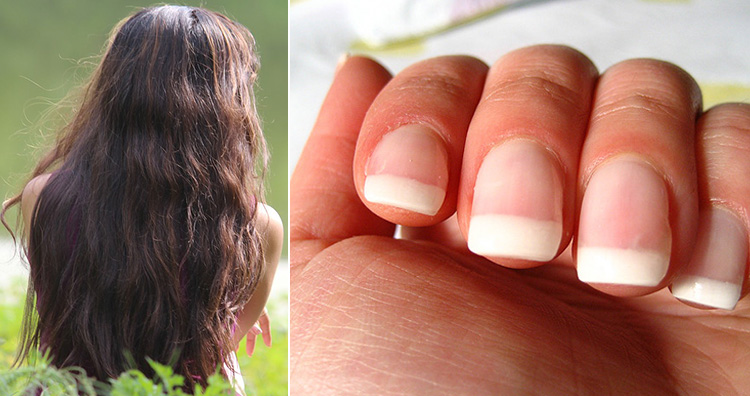
Hair and fingernails continue to grow after death.
Reality: Dehydration of the body after death and drying gives an illusion that the hair and fingernails might still be growing.
According to expert forensic anthropologist William Maples, it is a myth that the nails and hair of a person continue to grow after death. For fingernails to grow, your body needs to produce new cells, and this can’t happen after your heart stops. There is no glucose production after you die. The same goes for hair.
But there is a biological basis for such observations. What happens is that the skin around the nails retracts as it becomes dehydrated. This makes the nails appear longer than before. When preparing a body, funeral directors sometimes moisturize the fingertips to counteract this illusion.
The skin on a dead man’s chin also dries out. It pulls back towards the skull as it happens. This leads to the appearance of short, stiff hairs on a man’s face similar to when he has not shaved for a while. Also, goosebumps caused by the contraction of the hair muscles adds to this effect.(source)
Myth #3
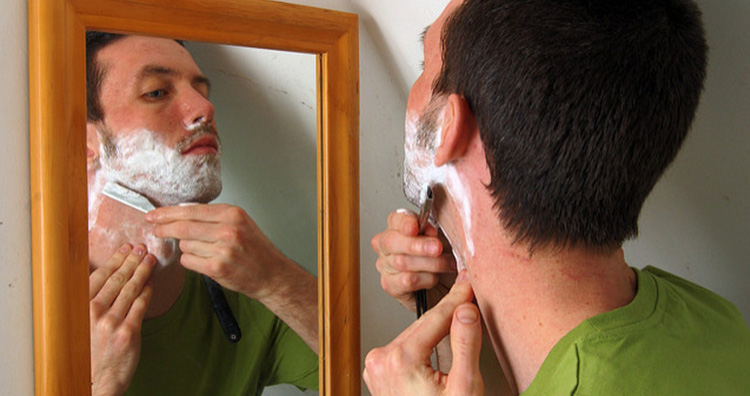
Shaving hair causes it to grow back faster, darker, or coarser.
Reality: Shaving does not play any part in affecting the rate or type of hair growth.
Strong scientific evidence disproves this myth. “People are just not very good observers, but there’s just no science behind hair growing back thicker,” says Amy McMichael, chair of the Department of Dermatology at Wake Forest Baptist Health.
In 1928, four men agreed to be a part of a study to prove or disprove this myth. For the study, the men shaved off a portion of their faces in one downward stroke. They used the same brand of shaving soap, razors, and same water at the same temperature. The researchers then collected the cut-off hairs to compare them after each measuring. They arrived at the conclusion that there is no evidence that shaving accelerates the rate of beard growth. A similar study conducted in 1970 produced the exact same results.
Shaving removes the dead portion of hair, not the living section lying below the skin’s surface. Hence, it is quite unlikely to affect the type or rate of growth.(source)
Myth #4
Pregnancies from sex between first cousins carry a serious risk of birth defects.
Image credit: Pixabay
Reality: The risk is 5–6%, similar to that of a 40-year-old woman’s pregnancy.
The Journal of Genetic Counseling published a related study in 2002. The study determined that the risk of serious genetic defects, like cystic fibrosis and spina bifida in children of first cousins, indeed exists. But it is rather small and just 1.7 to 2.8 percentage points higher than for children of unrelated parents who face a 3 to 4 percent risk. This is almost equal to children of women giving birth in their early 40s.
There have been more studies that suggest that the risks are even lower. In 2009, Alan Bittles, a researcher at the Centre for Comparative Genomics at Murdoch University in Australia and one of the authors of the 2002 study (mentioned earlier), published a paper. They stated that the mortality rate of children of first cousins was closer to 3.5 percentage points higher than children of unrelated parents, as opposed to 4.4 percentage points higher which was mentioned in the previous 2002 study.(1,2,3)
Myth #5
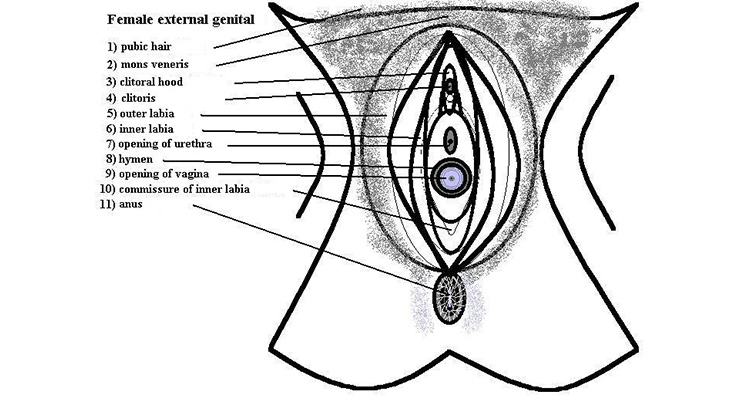
Female virgins have a hymen covering their vagina which gets popped the first time they have sex.
Reality: Virginal hymens that can “break” or “pop” during first sex don’t exist.
In many cultures, shortly after weddings, new husbands are expected to produce bloody sheets to prove that their brides are virgins. This is a ridiculous tradition that is prevalent across the globe even today.
It is a fact that tissue indeed exists down there, but the notion that it’s a uniform piece of the female anatomy that must, at some point “break” is just plain wrong. Female babies are born with membranes that surround their vaginal openings. Newborns’ hymens tend to be prominent and thick. But with age, most of the tissue thins out and the opening widens. Most hymenal tissue wears away because of walking, athletics, and self-exploration with only bits remaining around the vaginal opening.
Then why the discomfort and bleeding? Anna Knöfel from the Swedish Association for Sexuality Education points out that rushed, non-sensual, and poorly lubricated intercourse sometimes scrapes sensitive vaginal tissue that causes the pain and the bleeding.(1,2)
Myth #6
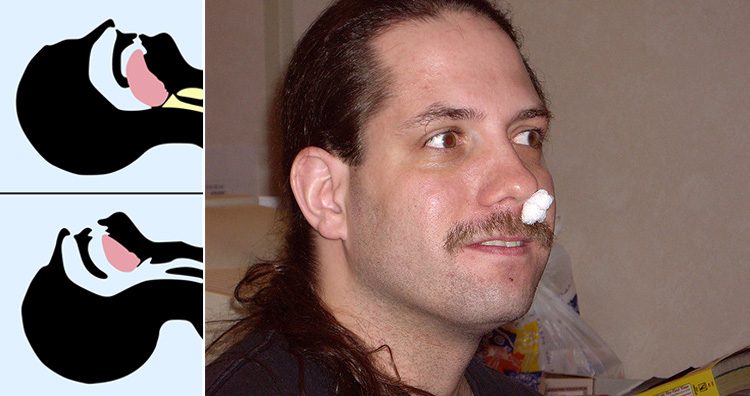
You should tilt your head back when you have a bloody nose.
Reality: Tilting your head back during a nosebleed causes the blood to trickle down the throat, sinuses. or the airways which can lead to gagging or choking.
This is one of the most common myths that we all must have experienced at some point. Dr. Diane Heatley, associate professor at the University of Wisconsin School of Medicine and Public Health says that the old remedy of tilting back the head doesn’t actually work and can even be fatal. Holding back the head can cause the blood to flow down the throat and cause choking. If enough blood trickles down into the stomach, its lining can get irritated and induce nausea and vomiting.
Nosebleeds usually start in blood vessels in the front of the nose. The person suffering a nosebleed should sit up and lean forward. This will make blood exit the front of the nose. Then gentle pressure should be applied on the nostrils until normal clotting starts.(1,2)
Myth #7
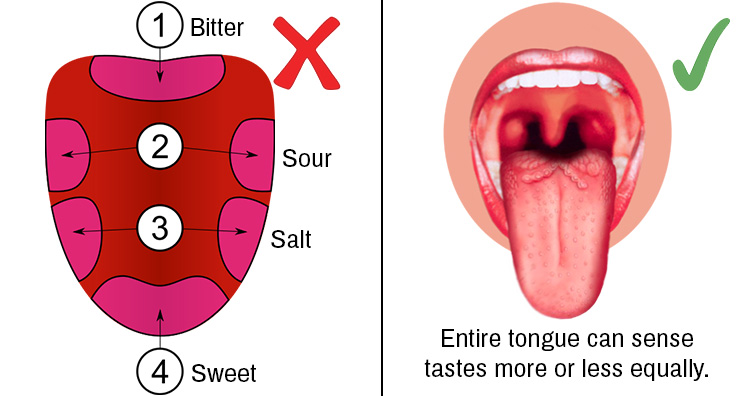
The tongue is mapped into four specific areas — sweet, sour, salty and bitter.
Reality: The entire tongue can sense these tastes more or less equally.
It’s time to change the tongue diagram that has been part of all science school books. Our tongue is not divided into four different regions for four different tastes. One of the first breakthroughs in taste bud research occurred in 1974 when researchers realized that the tongue map was just a century-old misunderstanding that no one challenged.
In 2006, scientists identified a protein that helps in detecting sour taste on the tongue. The protein works as a receptor cell that helps in identifying the taste. By 2010, Charles Zuker, who runs a lab at the University of California, and his team could identify receptor cells for all the tastes.
His studies suggested that our tongue has approximately 8,000 taste buds and each contains a mixture of receptor cells that allows them to taste any of the five tastes – sweet, salt, bitter, sour, and umami, a newly discovered savory taste that responds to glutamate.(source)
Myth #8
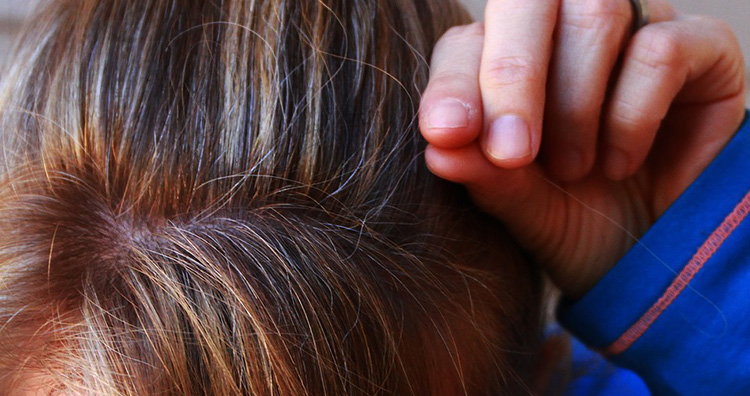
Stress contributes to graying of hair.
Image credit: Pixabay
Reality: No clear link has been found between stress and gray hair.
There’s a famous legend that Marie Antoinette’s hair turned white the night before she was guillotined. The reason suspected was the stress of impending decapitation. But scientists say that that is extremely unlikely. Even though stress may have little impact on gradual graying, the effect is almost negligible.
According to David Fisher, professor of pediatrics at Harvard Medical School, graying of hair is caused by the depletion in the production of melanocytes that impart color to our hair. Stress hormones may impact the survival and/or activity of the melanocytes, but there has been no clear link established between stress and gray hair.
Tyler Cymet, head of family medicine at Sinai Hospital adds that graying of hair is “genetically outlined, but stress and lifestyle give you a variation of plus or minus five to 10 years.”(source)
Myth #9
Smoking Hookah is safer than smoking cigarettes.
Image credit: Pixabay
Reality: An hour-long hookah session produces about 100 to 200 times more smoke-filled air by volume than a single cigarette.
Researchers from the University of California at San Francisco (UCSF) have conducted a new study. They confirmed in a crossover study of 13 smokers who used both cigarettes and hookahs that a hookah isn’t necessarily safer than a cigarette. As per the study, a hookah doesn’t necessarily remove all the harmful substances from the smoke.
According to UCSF research chemist Peyton Jacob III, while hookah smokers consume less nicotine than cigarette smokers, they have an increased exposure to carbon monoxide (CO) and the carcinogen benzene.
UCSF tobacco researcher Neal Benowitz further adds that smoking from a hookah daily presents a higher risk of cancer.(source)
Myth #10
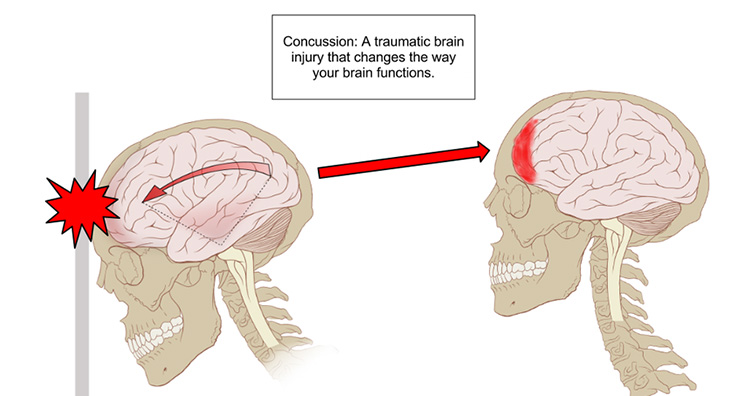
You need to stay awake if you’ve had a concussion.
Reality: The myth that people need to be awake after a concussion likely grew out of serious head injuries that led to a coma. But concussions are seldom life-threatening.
The myth that people need to stay awake after incurring a concussion most likely grew out of a misunderstanding associated with a particular type of head injury. This type of injury involves brain bleeding and causes people to have a “lucid period,” followed by a coma or even death. But this is very uncommon and doesn’t pertain to people with normal concussions.
In fact, whenever a person endures an injury to the head, the brain requires time to heal by not being active so much. Under such circumstances, sleep seems perfect. It’s not bad, it’s a good thing. Some researchers argue that people suffering from concussions should be woken every hour or two on the first night to keep a check on whether they are alright. It should be checked whether they are able to hold a conversation before allowing them to go back to sleep again.(source)
Templatesyard is a blogger resources site is a provider of high quality blogger template with premium looking layout and robust design. The main mission of templatesyard is to provide the best quality blogger templates which are professionally designed and perfectlly seo optimized to deliver best result for your blog.















 Hello, my name is Jack Sparrow. I'm a 50 year old self-employed Pirate from the Caribbean.
Socialize