Tayler Ivy Boncal is a 22-year-old teacher at Conard High School in West Hartford. She was charged with sexual assault on Thursday. The charge came after there were reports that Boncal was involved with an 18-year-old student, according to the Hartford Courant. The woman was hired as a student teacher back in December, and that is when she met the teen.
According to the newspaper, once Tayler completed her fall student teaching position, she decided to stay on the faculty as an assistant track coach. The 18-year-old told police that the two began texting one another on December 13th after he asked Tayler for her phone number. Authorities note that Boncal would invite the teen over to her house a number of times and the two would have intercourse.
It has been reported that according to police, Boncal has been charged with three counts of second-degree sexual assault. The Hartford Courant reports, “She is accused of engaging in intercourse and oral sex with the student under a statute that prohibits sexual contact between teachers and students in their schools.”
Police have also added that the sexual encounters took place from December 25th to January 11th at the young woman’s home in New Britain. It was reported by Tom Moore, superintendent of West Hartford Schools, that a “concerned parent” tipped off school officials about the alleged relationship. School officials then notified the police.
Trinity College
It’s been reported that both the 18-year-old and the former teacher told police that the student was the one who initiated the relationship. The teen asked for the woman’s number around mid-December. The two started texting on December 13th. Boncal told police that the teen was really kind to her and that she loved him and had serious feelings for him.
According to the Courant, the alleged victim initially denied the relationship to investigators but eventually told them of the encounters. The student told officials that he had lost his cell phone, but the two had been exchanging sexually explicit photos and messages. Though most of this was done via Facebook Messenger. Police noted that the victim refused to provide a written statement.
They continued, noting: “The victim expressed concern for Boncal with regard to the outcome of this investigation.” The Principal of the school, Julio Duarte, notified parents of Boncal’s arrest on Friday, writing a letter to them. Boncal was arraigned on Thursday and has since been released from custody, according to reports. She is set for court on March 1st. The principal noted in his letter, “Whether someone is 21, 41 or 61, the moment they are a part of a school as a student teacher, mentor or coach, they enter into a sacred trust with our students and community.”
Language is something that we generally take for granted. We seldom wait to think about the origins of the words that we use in our daily conversations or the reason why we use certain words and the phrases the way we do. The world houses thousands of languages that all have interesting attributes and facts behind them. We bring to you 12 of the coolest linguistic facts from languages around the world.
1. Pirahã is a Brazilian language that can be whistled, hummed, or encoded in music.
The Amazonian rainforests house a tribe of indigenous people known as the Pirahã. Their language, Pirahã, is one of the last surviving dialects of the Mura language, the language of the state of Amazonas, Brazil. Even though the language is one of the simplest languages phonologically, there are certain things about the language that would just blow your mind.
The Pirahã language contains one of the smallest phoneme inventories which means that there are very few sound variations in the language. The language also does not contain any words to refer to colors. It just has two words for light and dark.
Another unique feature of the language is that it can be hummed and whistled and can be understood without the use of any physical words. Moreover, according to Daniel Everett a researcher working on the language, vowels and consonants can be removed entirely from the language, and yet the meaning can be communicated to other people through variations in pitch, rhythm, and stress. The tone you use determines the meaning that you wish to convey! The Pirahã mothers have been known to teach the language to the kids by singing the same tunes over and over again.(source)
2. There is a language in Africa that only uses five distinct clicking sounds to make up the entire language.
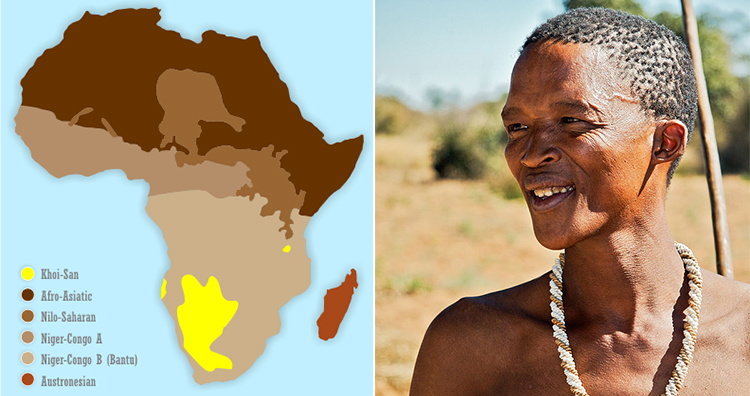
Africa has a number of languages that just consist of click sounds! Known as Khoisan languages, clicks function as normal consonants in these languages. Clicks are distinctive sounds that are made in the mouth via a suction mechanism. This leads to a sharp popping or smacking sound when the tongue touches the roof of the mouth.
Most of these languages consist of just four clicking sounds that can be used to represent the majority of the consonants. Some southern languages use a fifth click, the kiss sound.
Clicks are the initial sounds in about 70% of the words that are part of the Khoisan vocabulary. They offer a bit of dramatic effect during conversations. The uniqueness of these languages has given rise to speculations that maybe the sounds have some kind of special meanings attached to them. But experts believe that that is not the case.(source)
3. The English language consists of words, known as contronyms, that are their own opposites. For example, the word “cleave” has two meanings, i.e. “to cut apart” and “to bind together” which are opposites of each other.
“Contronym” is a word that has multiple meanings in which two of the meanings are completely opposite of each other. Such words are also known as “autantonyms” or “contranyms.” The English language has numerous examples of contronyms. The contronyms might have originated when two different words with different etymologies converged to form a single word or when a single word acquired different and opposite meanings over a span of time. Some contronyms that are commonly used in the English language include “dust“ (verb) which stands for both “to remove dust” and “to sprinkle with soil or dust;” “enjoin” (verb) which stands for both “to prescribe” and “to forbid;” and “ravel” (verb) which stands for both “to tangle” and “to disentangle” threads or fibers.
Apart from English, contronyms can be found in other languages as well. In Latin, “sacer” stands for both “sacred” as well as “accursed.” Also, the Romanian verb a “închiria” means “to rent” as well as “to let.”(source)
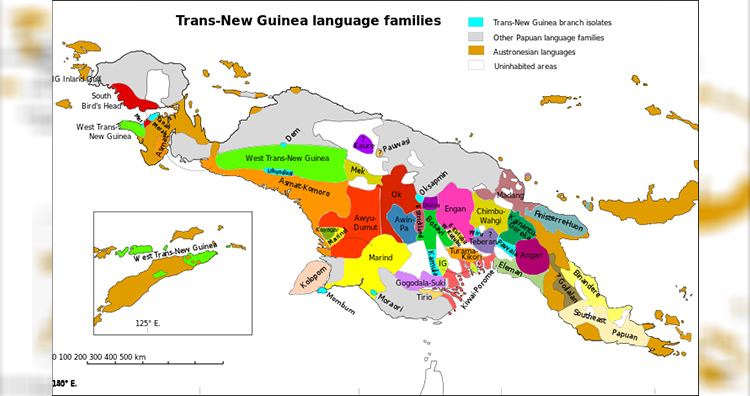
4. Papua New Guinea has over 850 living languages.
Papua New Guinea has over 850 languages that are spoken by the tribes residing there. Mind it, these are not dialects. These are whole languages making Papua New Guinea the most linguistically diverse place on earth. They even have a sign language, Papua New Guinean Sign Language, as one of the four official languages with the other three being Tok Pisin, English, and Hiri Motu. Even though English is an official language, it is spoken by only 1–2% of the population.(source)
5. The word “cliché” was originally an onomatopoeia. It came from the sound that old printing presses made while making copies.
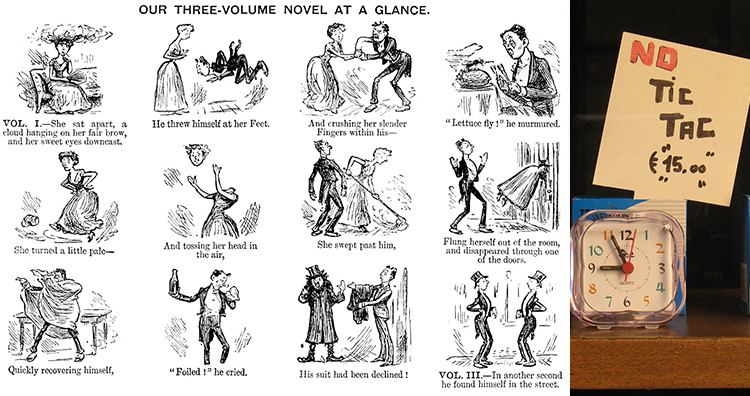
“Onomatopoeia” refers to words that describe or mimic the sound that it describes. For example, the sound of a clock can be expressed as “tick-tock” in English. The origin of the word “cliché” was also onomatopoeic.
“Cliché” originated from the French language. The word was used in reference to printing where it referred to a block that reproduced words or images that would be used repeatedly later during printing. It originated from the clicking sound that the printing machine made while making copies.(source)
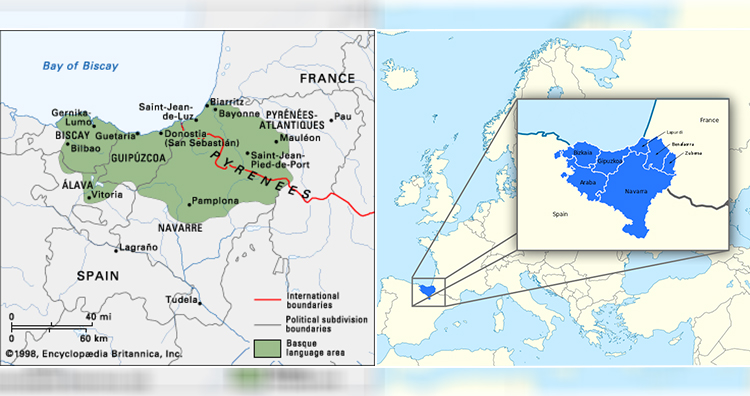
6. Basque is a language isolate. This means that the language is not related to any other known living language even though it is spoken in the region between France and Spain.
Basque is a language native to the people who reside in the Basque country, a region that lies between the borders of France and Spain on the Atlantic coast. What’s unique about the language is that linguistically, Basque is not related to any language of Europe nor to any other known living language that exists in the world.
Basque is the last remaining language among numerous languages that were spoken in southwestern Europe before the region was Romanized in the 2nd century BCE. According to some statistics, Basque speakers can be found in other parts of Europe as well as the Americas. These speakers are majorly bilingual and are said to be approaching a million in the 21st century.(source)
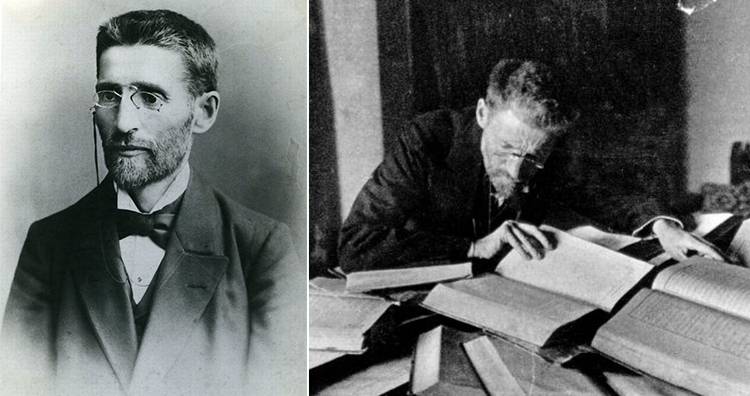
7. Hebrew died as a spoken, native language around 200 CE. It was later revived on 13 October 1881 in Paris when a man named Eliezer Ben-Yehuda and his friends agreed to exclusively speak Hebrew in their conversations.
The Biblical language Hebrew was spoken some 3,000-3,500 years ago. Once upon a time, it was a language spoken by many. But after the Bar Kohba War of 135 CE, Hebrew slowly started declining as a native, spoken language, even though it was still used for writing for many centuries thereafter.
It was on October 13th, 1881 that the language was once again revived by a group of friends. Eliezer Ben-Yehuda and his friends made a pact to only converse in Hebrew. The credit goes to Eliezer for reviving the language after so many years. Eliezer started learning Hebrew when he was just three years old. When Jewish nationalism gained popularity in 19th century Europe, Eliezer became fascinated with Zionism. He also became acquainted with the concept that speaking a common language is a criterion to define a nation worthy of national rights. This gave Eliezer the idea that reviving the Hebrew language would help to unify Jews worldwide.
Eliezer has had a major contribution to the establishment of the Committee of the Hebrew Language which later became the Academy of the Hebrew Language. He also wrote the first Modern Hebrew dictionary.
As of today, Hebrew is spoken by more than 5 million people as their native language and is the national language of the State of Israel.(source)
8. Mbabaram is an extinct Australian language in which the word for dog is “dog.” There is no relation between these words, and this is a pure coincidence.
Prof R. M. W. Dixon, Book Cover – Searching for Aboriginal Languages – Memoirs of a Field Worker. Image source: research.jcu.edu.au, amazon.com
Mbabaram was the traditional language of the Mbabaram tribe and is an extinct Australian Aboriginal language. The language is quite famous in linguistic circles because of a striking similarity that it has with an English word.
R. M. W. Dixon, author for Searching for Aboriginal Languages: Memoirs of a Field Worker and a researcher of the language, began studying the language by extracting a few nouns. One of the nouns was the word for “dog.” He discovered that the Mbabaram word for dog was in fact “dog,” and it was pronounced almost identical to the English word. But this is a pure coincidence. There is no relationship between the two languages.(source)
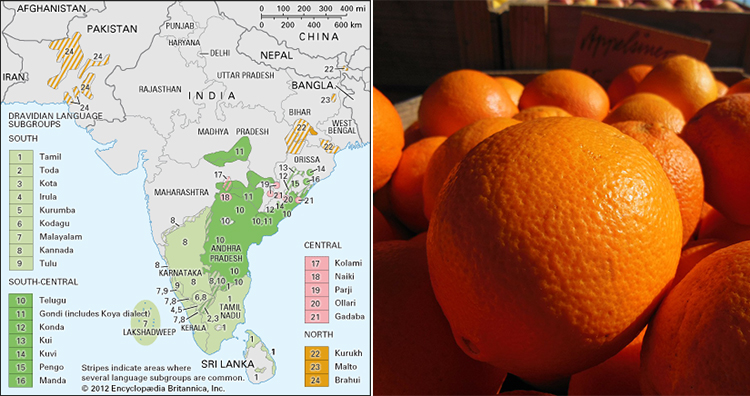
9. Before the English-speaking community was introduced to the fruit, the color orange was referred to as “geoluhread” which stood for red-yellow in Old English.
There was no orange color in English before the English-speaking people came to know of the existence of the fruit orange. The word is known to be a derivative of a Dravidian language, possibly Tamil, and it was passed through numerous other languages such as Sanskrit and Old French. Finally, it reached the English language. The earliest recorded use of the word “orange” in English was in the 13th century when it referred to the fruit. It was only in the 16th century that the word was used to refer to the color.
Before the fruit was introduced to English speakers, the color orange was known as “geoluhread.” It meant red-yellow in Old English.(source)
10. People who communicate via American Sign Language can have accents just as they would in a spoken language.
A research at the University of Pennsylvania discovered that people who converse via American Sign Language (ASL) have an accent of their own similar to people who speak the language. There was a comparison made between the ASL used by people in Philadelphia and the standard ASL. It was found that many of the words were exceptionally different when compared with standard ASL guidelines. The Philadelphia sign language was found to resemble French more than standard ASL.
People who use sign language have accents that vary depending on their age, ethnicity, and whether they are able to somewhat hear or are completely deaf. It has also been observed that the speed in which they deliver the conversation also differs. People using sign language in New York are fast talkers whereas those in Ohio were slow and relaxed. Moreover, people belonging to the southern states of United States tend to touch their lower face and chest when they communicate with sign language, and that has become a distinct regional accent.(source)
11. The English language has an order in which adjectives go and it sounds wrong if the adjectives are not in that order. For example: “loose red top” vs. “red loose top.”
Image credits: Pixabay, Pixabay
Let’s say it is a warm sunny day and you were roaming outside with your friends wearing a red loose top. Does the sentence sound wrong to you? Should it be “loose red top” instead of “red loose top?” It should be, shouldn’t it?
There is a code that governs the order in which English speakers use adjectives in their sentences. Nobody is taught the order. It is mostly based on the intuition that makes the sentence sound wrong if the adjectives are used in the wrong order.
Such problems generally arise when the border between adjectives for size and color disappears. Linguists have determined a code for such instances that goes as follows: general opinion, then specific opinion, then size, then shape, then age, then color, then provenance, then material (GSSSACPM). Studies have shown and confirmed that GSSSACPM is consistent in most of the instances of written English. In 2003, Stephanie Wulff used a computer program to go through thousands of texts and found out that 78% of the strings of adjectives followed the GSSSACPM code.
So, now, you decide whether this is a cool informative fact or an informative cool fact?(source)
12. The word “plumbing” originates from the Latin word for lead, “plumbum,” which is what most pipes were made of at the time.
The concept of plumbing has been prevalent since the ancient Roman, Greek, Indian, Persian, and Chinese civilizations. These civilizations had public baths and they needed to offer flowing water and wastewater removal systems in the baths. They used pipes that were made of lead.
The scientific name for the element lead is plumbum and its symbol is Pb. This is where the word “plumbing” came from. The word “plumber” also originated during this time.(source)
The Google street view is an ideal way of checking out a place or a country without moving out of your comfortable couch. It takes you on a tour of historic monuments or exotic countries, all without shelling out a penny. You can check out a neighborhood before you choose to move in but sometimes if you zoom in close, Street view offers you strange and unforgettable visuals.
Google Street View was launched in the US in 2007 and was merged into Google Earth within a year.Indoor views of businesses were added in 2010 and views from the past, in 2014.
The cameras used contain no mechanical parts, with CMOS sensors and an electronic rolling shutter used instead. It is speculated that rapid movement of the camera in panoramic mode causes the resulting distortion in the images.
The disturbing images were captured by Google’s Street View that used a 360-degree camera to take vivid sweeping images.
Although the weird sights are available to everyone who has access to the Google Maps, some of these sights were collected and shared by York-based artist Kyle Matthew F Williams, who goes by the handle Keelayjams on Twitter.
The precise reason for the disfigurement of the images has not been found definitively, but there is a speculative theory claiming that the faster moving camera may not have caught enough frames to provide a normal picture.
This is not the first time that the Google Maps has shared such warped images. Various collections of these strange pictures have been spotted and shared in Google Street View including a baby crawling alone outside a Gucci store, a dead body in the center of the crime scene and a tiger strolling in a car park etc. [source: dailymail.co.uk]
The recent dog-meat festival of Yulin and the spectacle that followed thrust China into media glare for reasons that are not exactly positive. If you were one of the people who thought that the dog-meat festival was seriously weird (and seriously inhumane), you really need to read the following facts about China; they are incredible and outrageous, and some of these will make Yulin’s annual (and now, thankfully banned) festival seem tame.
1. 20 million trees are cut every year to meet the Chinese consumption of 80 billion pairs of disposable chopsticks within a year.
If these chopsticks were to be laid out, they can cover Beijing’s Tiananmen Square, which is one of the world’s largest public squares, 360 times! Perhaps because of this, China’s forest cover is one of the lowest among all countries at 20.36 percent.(source)
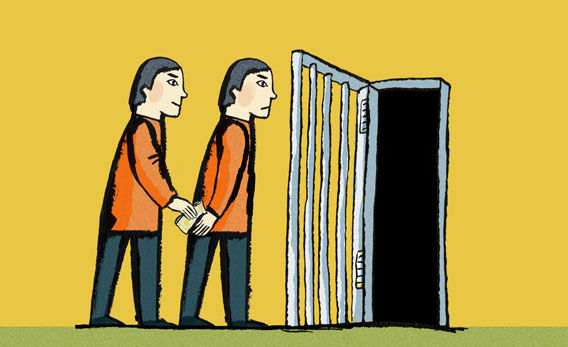
2. The rich and affluent in China who are sentenced to prison hire body doubles to take their place and serve the time.
If you are rich, you can buy anything you want. However, in China, this privilege extends to escaping prison sentences as well: the rich and powerful of the country have been known to hire “body doubles” to serve their time in prison. In fact, this is so common that the Chinese even have a phrase for it: ding zui, literally, “substitute criminal.”(source)
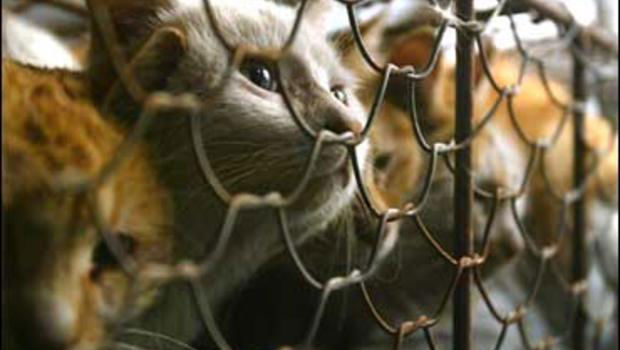
3. Every day, about 10,000 cats are eaten in the Guangdong province.
This is the Yulin dog-mean festival all over again, except, this time, with cats: each day, over 10,000 cats are consumed in the Guangdong province, infuriating activists and leading to several protests. The cats are apparently kept under abominable conditions, skinned, and cooked alive.(source)
4. The Chinese often dye their pets to have them resemble other wild animals.
Several Chinese people have dyed their pets’ fur in a way that they resemble other animals: take, for example, the golden retriever who was dyed orange and black to resemble a tiger, or the dogs whose fur was dyed to have them look like pandas. Maybe these extravagant dye jobs have something to do with the money spent on pets in China increased by nearly 500 percent between 1999 and 2008.(source)
5. China has WALL-E robot restaurants, with one of them – located in the Anhui province – having around 30 WALL-E robots that take care of the orders, the cooking, baking and delivery of meals.
These robots – costing approximately $10,000 – mainly greet customers and deliver their food to them. However, they also take care of cooking and baking duties in the restaurant – which, by the way, is an unauthorized restaurant.
Similarly staffed restaurants – and there are several in China – are all the rage among the Chinese.(source)
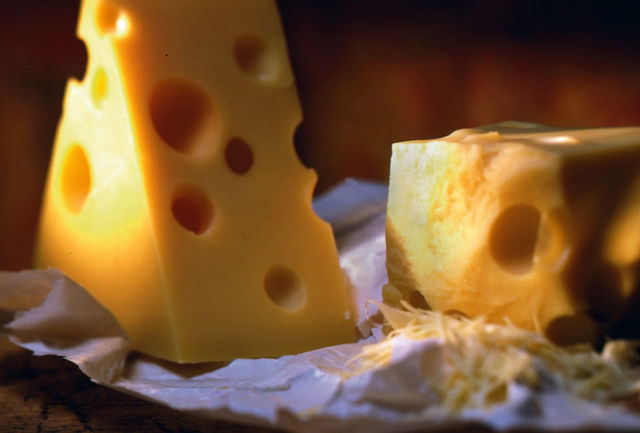
6. Most Chinese people consider cheese barbaric and have never tasted it.
Dairy products are associated with the nomadic people who resided on the outskirts of China and were considered to be barbarians of the first order. Many Chinese people, therefore, avoided dairy products altogether. The consumption has increased in the last few years; despite this, cheese still remains off the table, perhaps owing to its strong odor.(source)
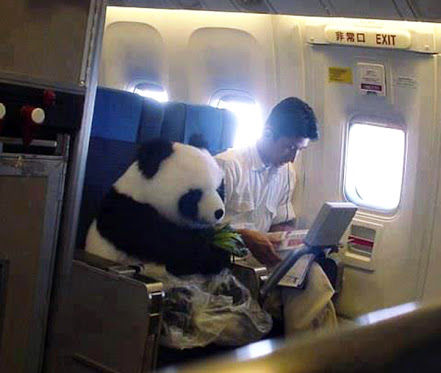
7. All the pandas in the world are on loan from China.
China has been lending pandas to other countries as a sign of goodwill since the Cold War – a tradition that has lived on. A newborn panda is sent back to China according to the agreement, in order to help expand their gene pool; these baby pandas are shipped using FedEx.(source)
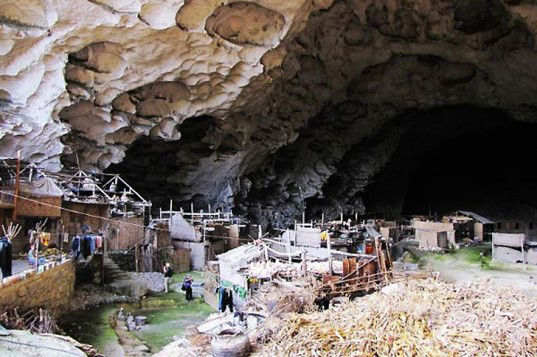
8. Over 35 million people in China still live in caves.
Many in China, especially those in the outskirts, live in caves, most of them being concentrated in the Shaanxi province. These caves are called yaodong in Chinese, and most have a long, vaulted room with a semicircular entrance carved into the side of a mountain, and although living in caves might seem primitive, some of these caves can provide for very luxurious living.(source)
9. A “cult” branch of Christianity in China believes that Jesus is still alive and living in China as a Chinese woman.
Also called the “Church of the Almighty God”, this sect preaches that the “second Christ” is a woman who calls herself the “Almighty God”. This group has been cited as a cult and, quite often, as a terrorist organization.(source)
10. Women who remain unmarried in their late 20s in China are called Sheng nu, literally, “leftover women”.
Although the term originated in and is used most extensively in China, it has now spread to describe unmarried women in their late 20s across the rest of Asia and North America.(source)
11. The pin in the picture has been placed just below the chin of a soldier in the Chinese army during training so that his chin remains straight; the pin also prevents the soldier from falling asleep from exhaustion.
The Chinese army’s discipline is legendary, and this picture is testimony to that: the Officers of the People Paramilitary Police have strict training, and, in order to ensure that their posture remains unwavering and perfect, they have pins attached to their collars, along with crosses on their backs.(source)
12. China had the longest traffic jam in history, lasting 12 days and stretching across 62 miles.
The longest traffic jam in history, this 62-mile long jam wound all the way to Beijing’s outskirts. During the traffic jam, vehicles moved less than one mile within a single day; drivers were spotted playing cards and sleeping on the asphalt.(source)
13. Companies in China have been caught making tofu in “gutter oil” and marinating meat in goat urine.
“Gutter oil” is the umbrella term used for cooking oil that has been recycled from waste oil collected from sewers, slaughterhouse drains and grease traps; several Chinese food manufacturers and restaurants have been found using this oil to cook their food in.
Some businesses have also been caught marinating duck meat in goat or sheep urine in order to give it the smell and taste of duck.(source)
14. Breathing Beijing air has the same effect on one’s health as smoking 21 cigarettes a day.
It is even visible from space. Image source: dailymail.co.uk
So polluted and toxic is the air in Beijing that a chain smoker would be at lesser risk of developing respiratory diseases than people residing in the capital city of China – perhaps the reason why they are strongly urged to wear surgical masks at all times.
In fact, the country is so polluted that its air pollution is visible from space, while the Great Wall is not.(source)
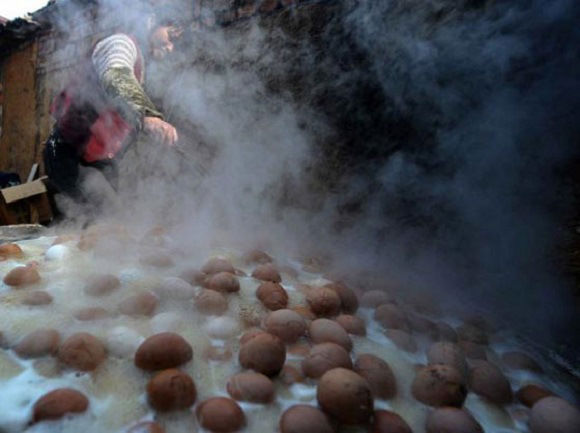
15. In Dongyang, China, every spring, eggs boiled in the urine of young boys is sold as a delicacy.
Called the “virgin boy eggs”, these are a delicacy that is enjoyed by those in the city, and are cited to have several positive effects on one’s health, such as purifying blood and providing energy. Of course, the fact that they “taste like spring” adds to their appeal.(source)
Templatesyard is a blogger resources site is a provider of high quality blogger template with premium looking layout and robust design. The main mission of templatesyard is to provide the best quality blogger templates which are professionally designed and perfectlly seo optimized to deliver best result for your blog.






















 Hello, my name is Jack Sparrow. I'm a 50 year old self-employed Pirate from the Caribbean.
Socialize