Smartphones have truly become the Swiss Army knives of handheld technology. Now that resources like maps and calculators are just a tap away, the need for separate appliances has become almost obsolete. Apple was not kidding around when they conjured up the slogan, “There’s an app for that.”
Smartphones of all brands now have the ability to do more than one person could possibly need. While games and social media platforms may perpetually top the app charts, there are some things your smartphone is capable of that could surprise you. Here are 12 things you might not have known your smartphone could do.
1. Digitize any document. Unless you have a scanner readily available, having to go out of your way to find one can be quite a burden. Luckily, apps like CamScannertransform your phone into a portable scanner. The app allows you to take a picture of any document and will instantly convert it to a high-quality PDF or JPG file.
2. Measure height and distance. Gone are the days of struggling with a measuring tape with apps like Smart Measure Pro (Android) and Dot Measure (Apple). These telemeter apps use the smartphone’s camera and are able to measure the distance, height, width, and area of a target by using trigonometry.
3. Digitize old negatives. You can view and digitize old film negatives by using your smartphone’s camera and applying the negative effect. There are also apps like HELMUT Film Scanner, which use a unique algorithm to automatically color-correct negatives.
4. Mail a postcard. Everyone loves receiving a personalized postcard, but the hassle to send one deters many. However, apps like MyPostcard have cut out the middleman and do the hard work for you. The app allows you to personalize a card with a photo and then send it from your phone to anywhere in the world.
5. Become a makeshift projector. If you’ve got an old shoe box lying around and a few office supplies, you can convert your screen into something much bigger. A number of tutorials online show how you can create your own projector by using your smartphone’s screen.
6. Detect metal. Many smartphones have a built-in magnetic sensor, which apps like Metal Detector utilize so you can measure magnetic field levels. All you need to do is move your device and the magnetic field level will increase when any metal is nearby.
7. Monitor your heart rate. Without any need for external hardware, apps like Instant Heart Rate will give you an accurate reading. All you have to do is place your fingertip on the front camera lens for 10 seconds and the app will give you a real-time chart that shows every heartbeat’s rhythm and pace.
8. Reverse search images and photographs. Most of us are aware how to reverse image search while browsing the web, but apps like Google Goggles allow you to search up information about an image captured by using your phone’s camera.
9. Instantly translate foreign languages. Travel bugs rejoice! Apps like Google Translate, which has this feature for free, use your smartphone’s camera to identify and then translate any printed words. The app covers major languages including French, German, Italian, Portuguese, Russian and Spanish. Ideal for deciphering foreign road signs and menus.
10. Project an augmented reality map on your windshield. It can be more distracting than helpful when you have to continually glance down at your phone screen when using GPS to navigate. HUDWAY has found a way to keep drivers’ eyes on the road by projecting a GPS-enabled map on the windshield without any extra equipment.
11. Control your home’s lighting. Say goodbye to installing dimmers. A variety of specialty light bulbs have hit the market, which allows you to control them from an app on your smartphone. You can set light timers, dim them, and even change the color of the bulb with only a couple of taps.
12. Provide extra security. Location tracking is nothing new, but bSafe has given users the option of extra security when traveling alone. The app audibly sends an SOS message to emergency contacts while tracking your exact location and recording what’s happening (video + audio) in case of a threatening situation.
Imagine accidentally stumbling upon something so rare that there is just one of its kind! And imagine that thing to be a motorcycle. How lucky would you be? This is exactly what happened with the rarest of all motorcycles – the Traub motorcycle. Not a known name in the world of motorcycle manufacturing, the Traub was discovered in 1968. Even though major parts of the motorcycle were hand-built, some of the off-the-shelf parts used have helped to determine the time of the creation of the motorcycle to be around 1916.
The 1916 Traub motorcycle was discovered hidden within the walls of a Chicago apartment in 1968. Only one such motorcycle exists in the world. Even though it remained hidden for more than 50 years, surprisingly, it was still in running condition.
In 1968, a plumber was carrying out renovation of an old apartment building in Chicago. He tore down a brick wall and was surprised to discover an old motorcycle hidden behind it. The motorcycle had the name “Traub” written on its tank.
As soon as the discovery was made, the original owners of the building were tracked down. They revealed that years ago, their son had stolen this motorcycle, most probably from the original owner, before going away to fight in the World War I. Perhaps the son hid the motorcycle in the wall to safeguard it until he returned from the war. But, unfortunately, he was killed in action and never returned leaving the motorcycle hidden away from the world for over 50 years.
Soon after its discovery, the motorcycle went through the hands of a number of owners, finally landing with Dale Walksler, the founder of Wheels Through Time Museum.
When the Traub motorcycle was first discovered in 1968, it was acquired by a Chicago motorcycle dealer by the name of Torello Tacchi. He traded a $700 Suzuki in exchange for the motorcycle and worked on it to bring it to perfect working condition. The motorcycle remained in his possession for about 10 years and was later purchased by Bud Ekins, the stuntman for the famous star Steve McQueen. Ekins again sold it to Richard Morris, a bike collector from California.
Finally, the Traub made its way to Dale Walksler who is the founder of the famous Wheels Through Time Museum. The museum has continued to be the home for the rare bike since its purchase by Walksler in 1990. Amazingly, the 101-year-old Traub still runs perfectly, and Walksler even up to today enjoys an occasional ride.
The motorcycle is well-known not only because it’s the only one of its kind but because of its high-quality craftsmanship. Experts have called it one of the most advanced machines of the early 20th century.
The 1916 Traub is the only one of its kind. Sure there have been numerous classical bikes throughout history, but none can surpass the complex engineering of the Traub. The machinery and the technique used to build the motorcycle was well ahead of its time. Most of the parts were hand-made with gapless cast iron rings. Also, the parts that were found on the motorcycle were never seen on any other bikes throughout history. It is as if the parts were specifically made for this machine only.
The 80cc, V-twin engine of the Tarub is hand built, sand cast, and is one of its kind. The Traub was equipped with a three-speed transmission which experts believe to be one of the first of its kind. The dual-acting brake system is also unique and never seen on any bikes of that era.
Historians and experts have been speculating for a long time on who the creator of the Traub might have been. The most promising candidate has been Gottlieb Richard Traub.
Historians have been frustrated for years over the identity of the Traub’s creator. Even though many have narrowed down the creator to a man named Gottlieb Richard Traub, there is no definitive proof. Gottlieb Richard Traub was a German born in America. In July 1907, Richard Traub wrote a letter to the editor of the Motorcycle Illustrated. In the letter, he mentioned in detail about a four-horsepower motorcycle that he built at home. The specifications of the motorcycle that he built were similar to that of the 1916 Traub. Moreover, he also owned a shop known as “Richard Traub Motorcycle Shop.” Above, you can see an image of the shop. In the image, the motorcycle to the right bears a strong resemblance to the 1916 Traub.
It is not clear when or where this photo was taken. But reports suggest that Richard Traub used to work out of a garage attached to his home. From the letter that Richard Traub sent to Motorcycle Illustrated, it was discovered that his home was located at Paulina Street, Chicago. Moreover, the apartment from which the motorcycle was retrieved in 1968 is located close to this particular street. This strongly suggests that there is a high possibility that Gottlieb Richard Traub might actually have been the creator of this rare and amazing motorcycle, even though there is no solid proof. [sources: 1, 2, 3]
Since its advent in January 2009, Bitcoin’s presence in the world has increased quite dramatically. Conceived as a cryptocurrency and digital payment system, it is also beginning to take on a more physical form. The decentralized governance of Bitcoin is one the main attractions among people who are skeptical about the efficiency and fairness of a central bank. Now, with several thousands of merchants and vendors accepting payments in bitcoins and ATMs popping up, Bitcoin is quickly becoming an influencing economic force as well in various nations. So, here are some amazing facts about Bitcoin that we are sure you would enjoy reading about.
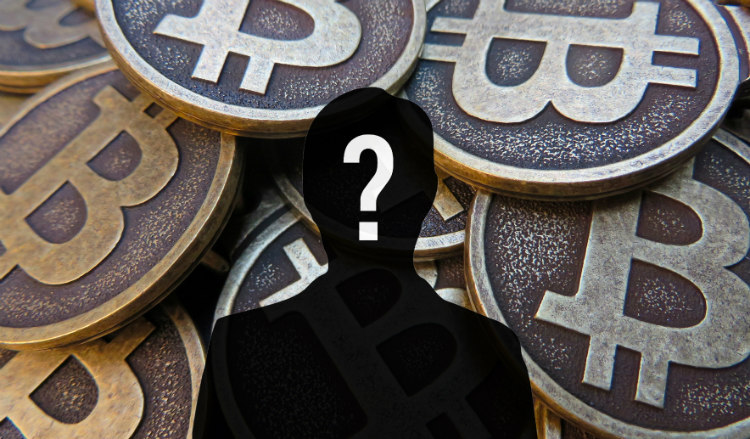
1. The founder of Bitcoin is someone known as “Satoshi Nakamoto.” No one knows who he is, what his real name is, or where he lives. As of 2017, he owns up to one million bitcoins which have an estimated value of $2.7 billion.
The only personal information available about Satoshi Nakamoto (his pseudonym) is based on claims and speculation. He is claimed to be a Japanese man born in April 1975. However, all the speculation regarding his identity was mainly focused on non-Japanese cryptographers and computer science experts residing in the United States. It was because of his use of perfect English, occasionally with British spelling, and as no Japanese labels or documents were found in his software. It is believed that he began coding Bitcoin software in 2007 and collaborated with other developers until 2010. After that, he handed over the reins to Gavin Andresen, his collaborator, and made him the lead developer of Bitcoin Core.(source)
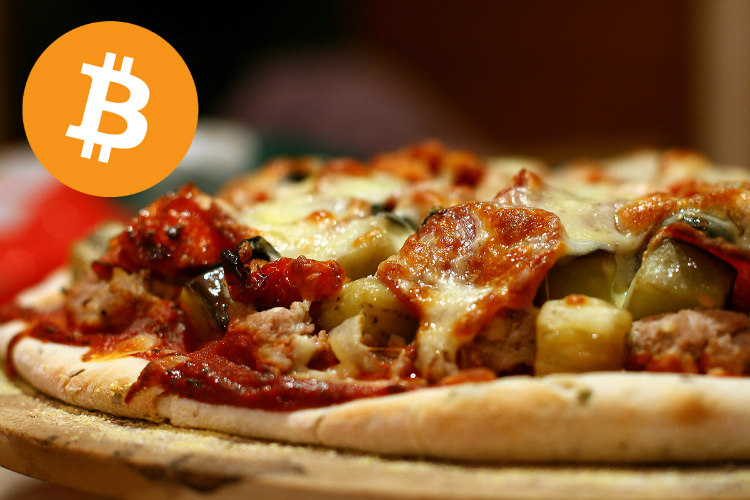
2. The first real-world transaction using Bitcoin was done to purchase two large, Papa John’s pizzas for 10,000 bitcoins. As of August 2017, that amount is now worth $27 million.
After the founding of Bitcoin, the early users were quite generous with sharing bitcoins. Nakamoto’s collaborator, Gavin Andresen, had even bought 10,000 bitcoins for $50 and gave them away on Bitcoin Faucet, a website he created. Another software programmer from Florida, Laszlo Hanyecz, made what is considered the first ever transaction in Bitcoin history. He bought two pizzas for 10,000 bitcoins by sending them to a volunteer in England who then made a credit card order transatlantically. Though it was only a few dollars at that time, those bitcoins are now worth over $27 million. Soon after that, a farmer named David Forster from Massachusetts started accepting bitcoins as payment for his alpaca socks.(1, 2, 3)
3. Unlike what most people think, bitcoins are not unlimited. The number of bitcoins in circulation will never exceed 21 million.
Our regular monetary system is a centralized economy which means that a central bank controls or issues currency based on the amount of goods that can be traded. Bitcoin, on the other hand, is a decentralized monetary system. There is no central authority to regulate the issue of currency. The currency is, instead, created by the users or nodes of a peer-to-peer network. This often gives the impression that currency could be generated infinitely. But, Bitcoin uses a bitcoin generation algorithm which defines in advance how and at what rate currency is created.
Bitcoins are created when a user discovers a new block. A block is a file that contains permanently recorded, read-only, transaction data. The rate of block creation is adjusted every two weeks to ensure that an average of only six blocks are created per hour. That is a total of 2016 blocks in two weeks. Approximately every four years. or for every 210,000 blocks, the number of bitcoins per block is decreased geometrically by 50 percent.
As a result, the number of bitcoins in existence will not exceed 21 million (more precisely 20,999,999.9769 bitcoins) and it is believed that the last bitcoin to be mined will be on May 7, 2140. This, however, is based on current technological limitations and it is difficult to accurately predict how Bitcoin mining evolves with new changes in technology in the future.(source)
4. The global Bitcoin computing power is 256 times faster than that of top 500 supercomputers combined!
Being a decentralized system, Bitcoin relies on a mutually beneficial relationship with miners. Miners are individuals or organizations that use the processing power of various types of processing hardware, including ad hoc ones. Mining is the process of adding transaction data to the public ledger of past transactions with the purpose of providing a secure and tamper-resistant transaction. In return, the miners receive transactional fees and a subsidy of newly created coins. So, on the whole, it creates a vast and global network of miners ensuring that the system remains decentralized and motivating people to keep the system secure.
As the competition for earning bitcoins increases so does the rate at which bitcoins are generated. And as the rate of bitcoin generation increases so does the difficulty in finding new blocks in order to compensate and regulate the rate of block creation. That means it requires immense processing power to discover new blocks. As a consequence, Bitcoin farms have cropped up around the world employing huge arrays of circuits for the purpose of mining.
By November 2013, the total Bitcoin FLOPS was 64 exaFLOPS (that’s 64 x 1018 FLOPS or floating point operations per second, a measure of computing performance while calculating real numbers). To put that into perspective, the top 500 supercomputers combined have only 0.250 exaFLOPS (25 x 1015 FLOPS). That makes the entire network of Bitcoin 256 times faster than the top 500 supercomputers combined.(1, 2)
5. Bitcoin has been sent into outer space.
Genesis Mining, the largest cloud mining company that sells Bitcoin mining contracts, has recently made the first ever peer-to-peer transaction in space. They’ve sent a paper wallet attached to the back of a 3D model bitcoin into space using a weather balloon. It crossed the Armstrong limit of 20 kilometers and reached a distance of 34 kilometers.(source)
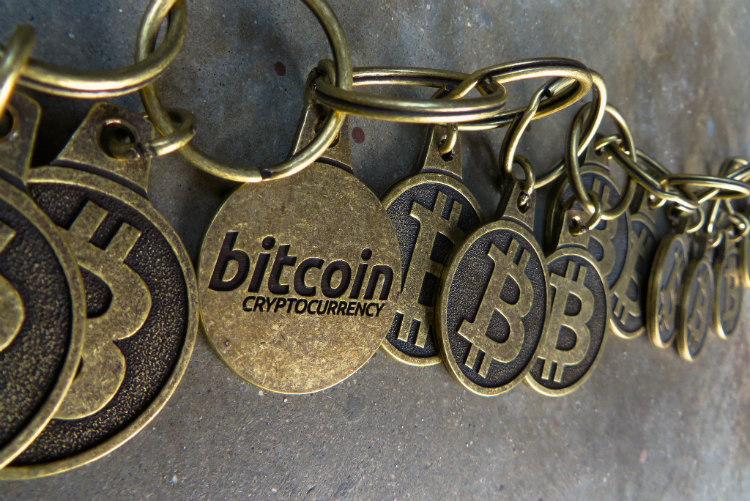
6. Bitcoin uses a public ledger called “block chain” for transactions. The invention of block chain made Bitcoin the first digital currency to solve the problem of double spending, an error in digital cash which allows the same token to be spent twice or more.
A blockchain (or block chain) is a distributed database of the public ledger that records all bitcoin transactions. Being a distributed database, it doesn’t need a central authority and is maintained by a network of communicating nodes running Bitcoin software. These nodes validate the transactions they receive and add them to their ledger. Also, around once every ten minutes, a newly created group of accepted transactions, or a block, gets added to the blockchain. It is then broadcast to other nodes so that each network stores its own copy of the blockchain. This ensures that the Bitcoin software knows when an amount is spent, preventing double spending.(source)
7. If you had invested $100 in Bitcoin in 2010, you’d be worth $72 million now.
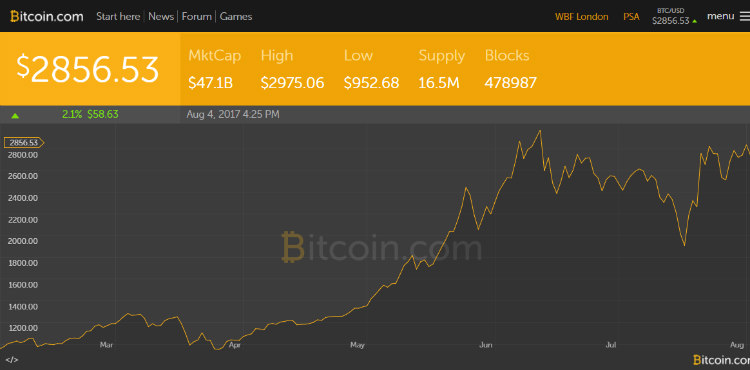
Since it was founded in 2009, the value of bitcoins has increased exponentially. Today a single bitcoin is worth around $2,782. Had you bought $100 of bitcoins in 2010 at the 0.003 percent price, you would have $72.9 million as of May 2017. In an interesting incident, while writing a thesis on encryption a Norwegian student, Kristoffer Koch, invested 150 kroner ($26.60) in 5,000 bitcoins in 2009. He soon forgot about his investment until Bitcoin became a widely covered topic on the media in April 2013. When he checked his wallet, he found his 5,000 bitcoins and, at the time of his rediscovery, they were worth 5 million kronor ($886,000).(1, 2)
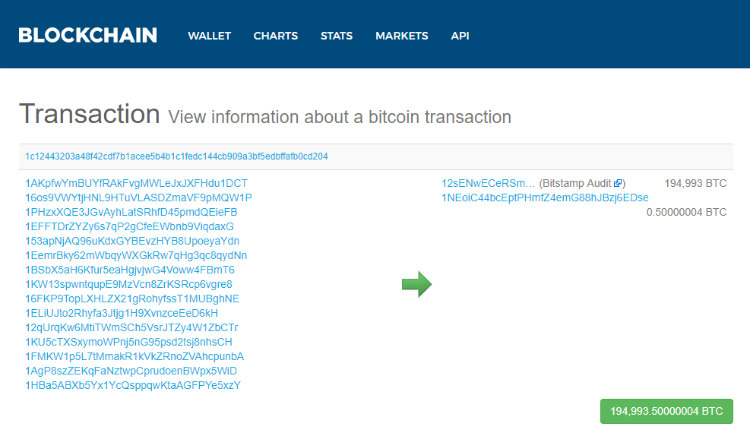
8. The largest transaction ever made on the network was for 194,993 bitcoins. That was more than $147 million according to the effective rate in November 2013. The transaction was tagged “Sh*t Load of Money!”
The Bitcoin system is maintained so that the transactions are public record but the users are only identified through addresses made of a string of 30 or more characters. So, unless the address is already known or the user wishes to be identified, they could remain anonymous. The users could also tag their transactions. On November 22, 2013, a transaction was recorded on the block chain involving the largest number of bitcoins, that is 1.6 percent of all bitcoins in circulation. A tag saying “Sh*t Load of Money!” was attached to the receiving address.
Though some were merely impressed by the fact that such huge transaction could occur without the hassles of cross-border logistics, some speculated as to who the user could be. Two of those speculations surround Satoshi Nakamoto, Bitcoin’s founder, and Richard Branson, an English business magnate who announced his company Virgin Galactic would accept bitcoin payment.(source)
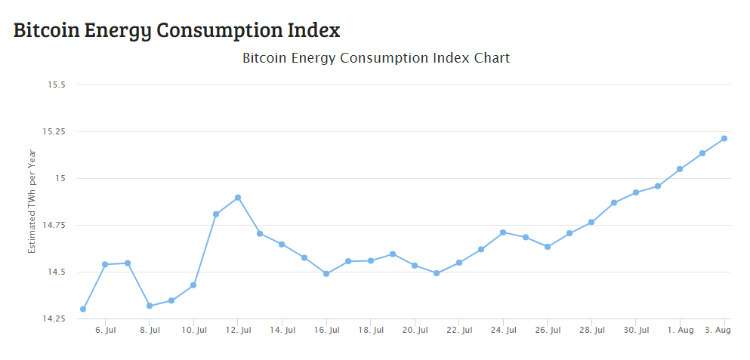
9. Every bitcoin transaction, no matter how small, uses at least enough electricity to power three average homes for an entire day.
As Bitcoin mining becomes increasingly complex with increasing competition, more and more processing power is needed to discover even a single block. The potential energy consumption for each transaction is as high as 94-kilowatt hours. That’s enough energy to power 3.17 households per day and almost three times higher than the 2015 energy consumption which was equivalent to the energy required by 1.57 households per day. For another comparison, today’s Bitcoin transactions’ energy requirement is also enough to fully charge a Tesla Model S P100D, the world’s quickest production car, and drive for 300 miles.(source)
10. The FBI has the world’s largest Bitcoin wallets consisting seized bitcoins, apart from Satoshi Nakamoto.
After shutting down the “Silk Road,” the online drug market, in September 2013, the FBI seized all the bitcoins belonging to its operator, Dread Pirate Roberts. The seizure made the FBI the owner of one of the world’s biggest wallets containing over 144,000 and 30,000 bitcoins. It is believed that they have also seized 96,000 bitcoins from another, similar operation called “Sheep Marketplace.” The FBI is probably the world’s second largest bitcoin holder as the first place belongs to Satoshi Nakamoto, who is said to have mined around one million bitcoins in the beginning.(source)
Templatesyard is a blogger resources site is a provider of high quality blogger template with premium looking layout and robust design. The main mission of templatesyard is to provide the best quality blogger templates which are professionally designed and perfectlly seo optimized to deliver best result for your blog.





 Hello, my name is Jack Sparrow. I'm a 50 year old self-employed Pirate from the Caribbean.
Socialize