According to NASA’s biographical data, Gordon Cooper, who was an astronaut with NASA, was selected as a Mercury astronaut in 1959. On May 15-16, in 1963, Cooper piloted the Faith 7 spacecraft on a 22-orbit mission. Cooper also served as a command pilot of the 8-day 120 revolution Gemini mission which started on August 21, 1965. It was during that flight where he and fellow astronaut Charles Conrad established a new space endurance record. Cooper also became the first man to make two orbital flights. Cooper died in 2004 due to heart failure but revealed a space treasuresecret that he had been keeping from NASA for many years, according to CBC News.
winnatyre
CBC News reports that Cooper was instructed to find potential nuclear threats by pinpointing magnetic anomalies while he was piloting the Faith 7 spacecraft for the Mercury-Atlas-9 expedition. Unfortunately, the anomalies that he was recording were much too small to be nuclear devices.
According to Darrel Miklos, who is a professional treasure hunter, he says that Cooper knew right away that they had to be shipwrecks because they were smaller and in the middle of nowhere–they were found in very isolated regions throughout the Atlantic, Caribbean and Gulf of Mexico, he told the As It Happens host Carol Off.
CBC News reports that Cooper recorded these coordinates in a notebook, and when he finally returned to earth; he started mapping them out on a sea chart. Miklos calls this “a treasure map from space.” These coordinates consumed most of Cooper’s life, CBC News reports. He compiled research about famous shipwrecks that matched coordinates on his map. Cooper’s findings led him to believe that the shipwrecks could be from the colonial period. During this period, ships would constantly travel to Europe from America, carrying treasures full of gold and silver.
ZackFrank/shutterstock.com
According to Miklos, a lot of that treasure in that period never made it back. He also added that some of it could be from Christopher Columbus’ lost fleet. According to the National Geographic, in 1494, Christopher Columbus made his second journey to the Americas. He took more ships and more men because he wanted to create the first European colony in the New World. Unfortunately, in just a few short years, his settlement would perish. Almost one-fifth of his inhabitants were dead and at least six of his ships were sunk at the bay.
EverettHistorical/shutterstock.com
Cooper had plans to organize an expedition to find these buried treasures, but as I mentioned earlier, he passed away in 2004 due to heart failure before he could finish his work. But before he passed away, he did what any good adventurer would do; pass on his knowledge to another adventurer. Cooper gave Miklos the map and research with it.
Miklos says that he hopes that Cooper’s map and research can help bring light to the shipwrecks that have yet to be discovered. He wants to tell the stories of these shipwrecks and show the world and share it with host countries that allow him and his team to conduct research and survey their countries.
Everyone’s favorite Norse seafarers, the Vikings, originated from Sweden, Denmark, and Norway. During what became known as the “Viking Age,” between the late 8th to late 11th centuries, they sailed and raided parts of Europe and were considered brutal raiders. The weapons they carried were not just meant for warfare but were also status symbols with hilts often decorated with silver, copper, and bronze. They were also sacred objects that helped them reach Valhalla after an honorable death. One such Viking sword was recently discovered at a most unlikely location.
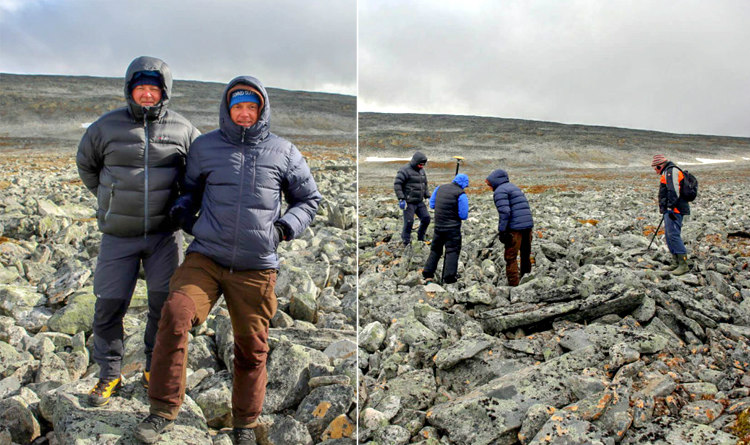
The Viking sword was found by Einar Åmbakk, a reindeer hunter, on top of a remote mountain in southern Norway at 1,640 meters (5,381 feet) above sea level. The sword dates back to circa 840-950 CE.
Åmbakk found the sword in a scree-covered area with its hilt buried between a few stones and half of its blade sticking up. Though there are traces of permafrost movement in the area, experts from Oppland’s Glacier Archaeology Program, a collaboration between Oppland County Council and University of Oslo’s Museum of Cultural History, believe it unlikely that the sword reappeared because of the movement as there were no scratches or bends on the sword. This meant that the sword was probably found in its original position or has slid only slightly.
Following the discovery, a team went to the location to look for further finds, but none were found. Archaeologists believe they cannot come up with a plausible explanation why the sword was in such an isolated and high altitude location.
The survey conducted by the archaeology experts covered a distance of 20 meters from the spot where the sword was found. Not only did they not find anything associated with the sword, but there was also no indication of any burial or sacrifice. It seemed unlikely that it was simply lost or left there and was not recovered. One suggestion was that whoever left the sword there must have found himself lost, perhaps in a snow blizzard. As no remains were found nearby, the experts hoped that if the Viking died a couple of hundred meters further east where there are ice patches, they could have had their first Norwegian Ötzi.
Viking swords were made of a state-of-the-art metal known as “crucible steel” which has very little slag and a high carbon content. The metal quality is astonishing to archaeologists as it required technology and temperatures that weren’t possible until 800 years later.
It is believed the Vikings obtained the crucible steel from the Central and South Asia via the trade route that connected Scandinavia and northern Iran. One way of removing slag from ore is to pound it out, though it is not very effective. To get pure iron, modern metalworkers melt the ore at 3,000oF (1,650oC) and add carbon to increase its strength. Among the many Viking swords found by archaeologists, over 170 of them were made of crucible steel by Ulfberht using a technique known as pattern-welding. Damascus steel is a similar metal that was made in India during the Middle Ages.
Surprisingly, the sword is remarkably well-preserved except for some rust on the surface and the organic handle that disintegrated. High-quality iron, cold conditions, and low humidity are believed to have been the reason.
According to Lars Pilø, the editor of Secrets of Ice, this wasn’t the first time a well-preserved, iron-made weapon was found. As the glaciers and ice patches recede due to climate change, more and more artifacts are being found in Oppland County. More than half of them, including isolated finds of well-preserved iron arrowheads, date as far back as 6,000 years. Two years ago, hiker Goran Olsen found a Viking sword made circa 750 CE in the Norwegian mountain village of Haukeli, around 150 miles from Oslo. [sources: SecretsoftheIce, NationalGeographic, History]
Many classic fairy tales had early versions that had some very grim content such as torture, rape, and cannibalism. Often, these graphic elements helped shape the stories into tales of caution. They were designed to teach children important lessons. Over time, the most gruesome parts were dropped to make the stories more pleasant. As a result, many of the stories completely lost their original meanings.
Here are some of the gruesome details that get left out in the modern versions of 10 classic fairy tales.
1. Cinderella’s evil stepsisters have their eyes pecked out by birds.
One of the most well-known early versions of “Cinderella” was recorded by the Brothers Grimm. The most surprising difference between this story and modern versions of Cinderella was the way it ended. The Disney movie ends with Cinderella and the prince getting married, riding off in a carriage, and the now-famous words “and they lived happily ever after” appearing on screen. In the Brothers Grimm version, the story ends by focusing on Cinderella’s evil stepsisters getting their just deserts. During Cinderella’s wedding, doves peck out her stepsisters’ eyes, and the story concludes by noting they had to endure blindness for the rest of their lives. Another gruesome detail left out of modern versions of the story is that the stepsisters cut off their toes and heels in an attempt to fit into Cinderella’s slipper and fool the prince.(source)
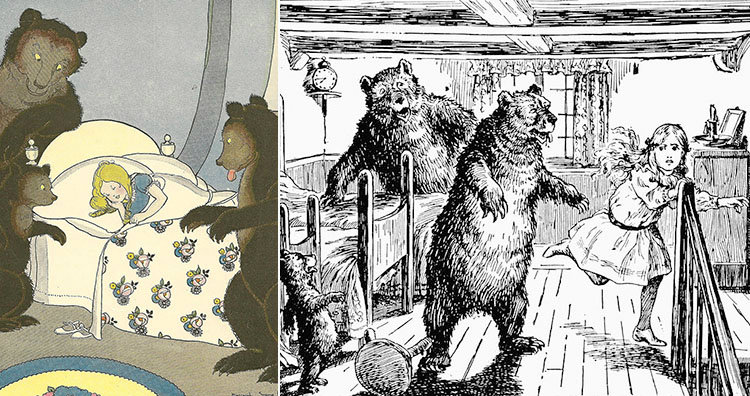
Today, the fairy tale of “Goldilocks and the Three Bears” is all about finding something that’s “just right,” but early versions of the story had a moral. The story was meant to teach a lesson about the hazards of exploring unknown territory and using the possessions of others. Originally, the main character was an old woman who was ugly, dirty, foul-mouthed, and inconsiderate. In one early version, when the bears get home, she tries to run away and breaks her neck. In another version, the bears throw her on top of a cathedral and she gets impaled on the steeple.(source)
3. The wolf fools Little Red Riding Hood into eating her grandmother and then tells her to get naked before coming to bed.
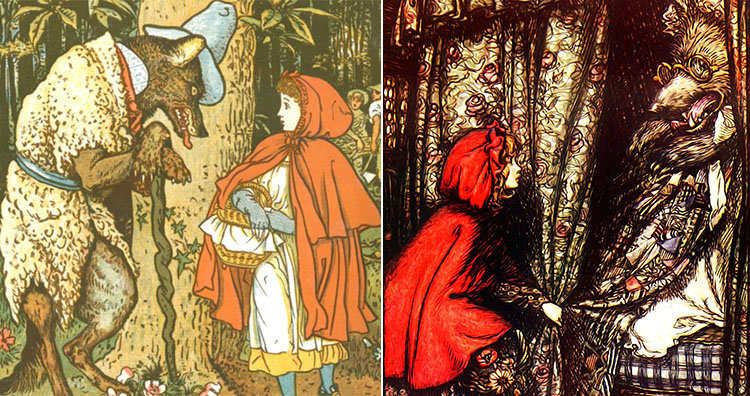
In some early versions of the fairy tale “Little Red Riding Hood,” there was no huntsman to come to the rescue and no happy ending. Little Red Riding Hood was simply fooled by the wolf posing as her grandmother and ends up getting eaten.
Early versions also had some sexual connotations as the wolf asked her to remove her clothes and throw them in the fire before getting in the bed. In many early versions, the wolf also fools the girl into cannibalizing her grandmother as the wolf had saved some of the meat and blood for the girl to consume.
The earliest known printed version was recorded by Charles Perrault in 1697. This version ended with an explanation of the moral. It said that children, especially young and pretty girls, should not listen to strangers. It also warned girls to be aware that the most dangerous “wolves” often disguise themselves as gentlemen until they get what they want.(source)
4. A king rapes Sleeping Beauty while she’s asleep.
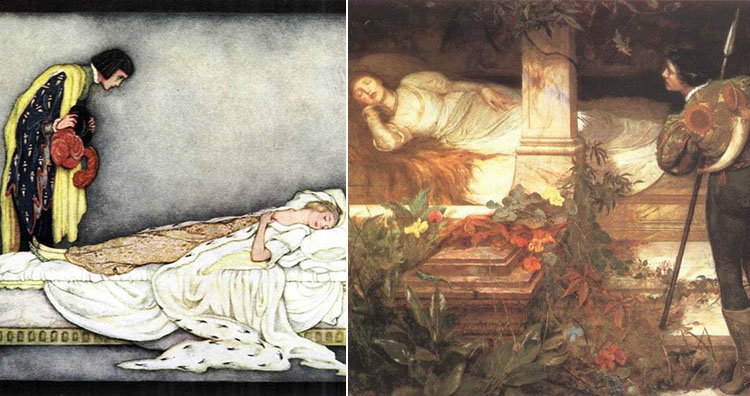
One of the earliest versions of the fairy tale “Sleeping Beauty” was published in 1634 by Italian poet Giambattista Basile, and it was based on a number of folk tales. One major difference from modern versions is how the sleeping princess is awoken. In Basile’s version, a king discovers the sleeping princess and has sex with her. The princess gets pregnant and gives birth to twins while still unconscious. She finally wakes up when one of the twins is sucking on her finger and sucks out the splinter that had caused her deep sleep.
Another difference from modern versions is that the king in this story is already married. When the king’s wife learns about the twins, she tells a cook to murder them, cook them, and serve them to the king. The cook fools the king’s wife by serving two lambs instead. Then the king finds out about his wife’s plan and orders that she be burned to death. He also rewards the cook for saving his children. The newly-single king is then free to marry the princess and live happily ever after.(source)
5. The Evil Queen gets tortured to death at Snow White’s wedding. She’s forced to wear red-hot iron shoes and dance until she dies.
In modern versions of “Snow White,” the villain is Snow White’s evil stepmother. But in the version published in 1812 by the Brothers Grimm, the Evil Queen is actually Snow White’s birth mother. Similar to modern versions, the queen gets jealous that Snow White is more beautiful than her, and repeatedly tries to kill her.
The most shocking difference is how the queen dies. In the Disney movie, the queen dies when she’s standing on a cliff and a lightning strike makes her fall to her death. But in the Brothers Grimm version, the Evil Queen gets invited to Snow White’s wedding. When the queen shows up, she’s shocked to see that Snow White is still alive. As the queen stands frozen out of rage and fear, Snow White gets some gruesome revenge.
“Iron slippers had already been put upon the fire, and they were brought in with tongs and set before her. Then she was forced to put on the red-hot shoes and dance until she dropped down dead.”(1,2)
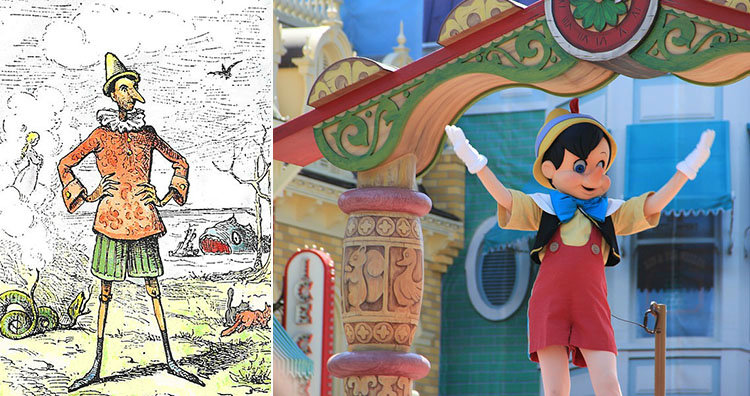
6. Pinocchio gets Geppetto sent to prison and then kills the talking cricket. The story ends with a detailed description of Pinocchio’s death by hanging.
The Disney film version Pinocchio had some dark themes, such as the part where naughty boys are turned into donkeys and sold into slave labor. But that’s nothing compared to the original story published in 1883 as the novel The Adventures of Pinocchio. That story was meant to serve as a warning against bad behavior, and so Pinocchio was depicted as an evil character with no redeeming qualities. For instance, Pinocchio starts kicking Geppetto as soon as the carpenter has finished carving his feet. Once he’s fully built, he laughs in his creator’s face, steals his wig, and runs away. The police then find Pinocchio and assume he was being mistreated, so they put Geppetto in prison. Pinocchio then returns home and kills the talking cricket that has lived there for over a hundred years.
Eventually, Pinocchio gets what’s coming to him as his enemies hang him from a tree. His death is described in vivid detail.
“Wind began to blow and roar angrily, and it beat the poor puppet from side to side, making him swing violently, like the clatter of a bell ringing for a wedding. And the swinging gave him atrocious spasms. His breath failed him and he could say no more. He shut his eyes, opened his mouth, stretched his legs, gave a long shudder, and hung stiff and insensible.”(1,2,3)
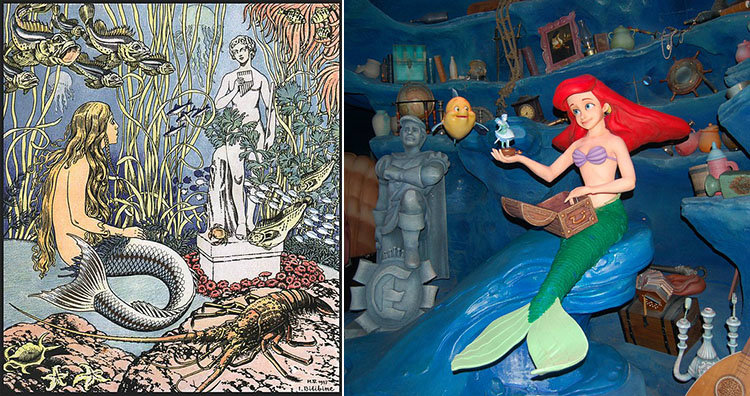
7. The Little Mermaid wanted to become human so she could have a soul. When it didn’t work out, she planned on killing the prince so she could go back to being a mermaid.
“The Little Mermaid” was published by Hans Christian Andersen in 1837. In the original story, the Little Mermaid learns that mermaids don’t have souls and dissolve into sea foam when they die while humans live on forever in the afterlife. So she decides she wants to become human.
In order to obtain a soul, she has to win the love of the prince and marry him. That way, part of the prince’s soul will flow into her. Her grandmother warns her if the prince marries someone else, she’ll die and turn into sea foam on the day after the wedding. When the Little Mermaid and the prince meet, he is mesmerized by her beauty and loves watching her dance. That last part is unfortunate because the mermaid’s human legs give her excruciating pain with every step, making it feel like she’s walking on sharp knives.
In the end, the prince decides to marry someone else. The Little Mermaid then has a chance to become a mermaid again by killing the prince with a sea witch’s knife and letting his blood drip on her feet. She’s about to kill the prince as he sleeps next to his new bride, but at last minute, she decides not to go through with it. So she dies and turns into sea foam. In the original version, the story ends there.
But the author later revised the story and added a happy ending. After the Little Mermaid dissolves, she becomes a spirit. She learns that because of her selflessness, she’s been given a chance to earn an immortal soul for herself. To do that, she has to perform good deeds for mankind for 300 years.(source)
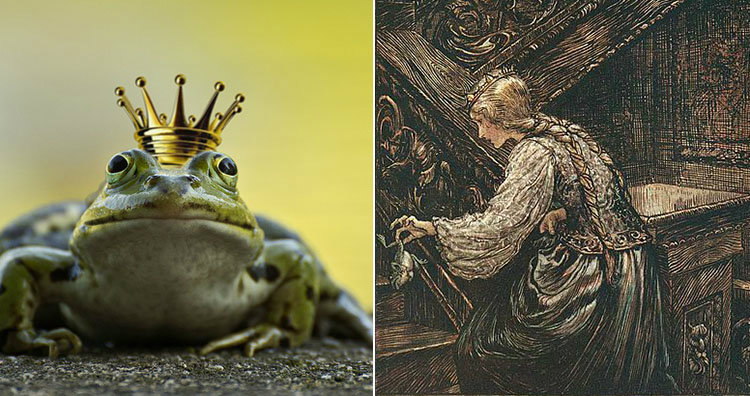
8. “The Frog Prince” was about a young woman overcoming her fear of male genitalia.
In most versions of this fairy tale, a princess accidentally drops a golden ball in a pond, and a frog offers to retrieve it in exchange for a kiss. When the princess kisses the frog, it magically transforms into a handsome prince and they get married. The moral of the story seems to be that if you keep your promises, good things happen. But some scholars say the story is really about a young girl maturing and getting over her fear of male genitalia. They say the frog is a symbol of a penis, and in early versions of the story, the princess promised to sleep with him. But she finds the frog so disgusting that it’s difficult for her. Once she gets over her disgust, she lives up to her promise and accepts him in her bed. Then she’s rewarded with a husband.(1,2)
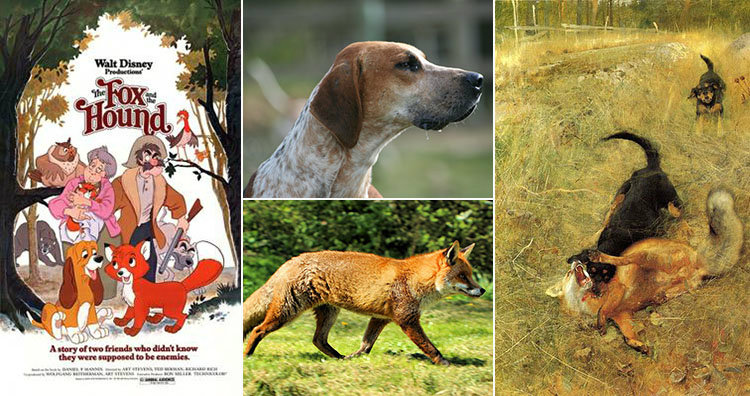
9. In the novel The Fox and the Hound, after the hound finally kills the fox, his owner decides to move to a nursing home where dogs aren’t allowed, so he shoots the hound.
This story is based on a novel published in 1967. In the Disney movie version, it’s a story about friendship. Copper the hound dog becomes friends with Tod the fox and prevents his master from shooting him, and everyone lives happily ever after. But things didn’t go so well in the novel. Instead, the fox lures one of the hunting dogs onto train tracks so it gets killed by the train. Copper and his master spend years hunting the fox to get revenge. Eventually, Tod dies from exhaustion after being relentlessly chased by Copper. By this point in the novel, Copper’s master is a run-down alcoholic who’s preparing to move into a nursing home where dogs aren’t allowed. So he takes Copper outside and shoots him with a shotgun.(1,2)
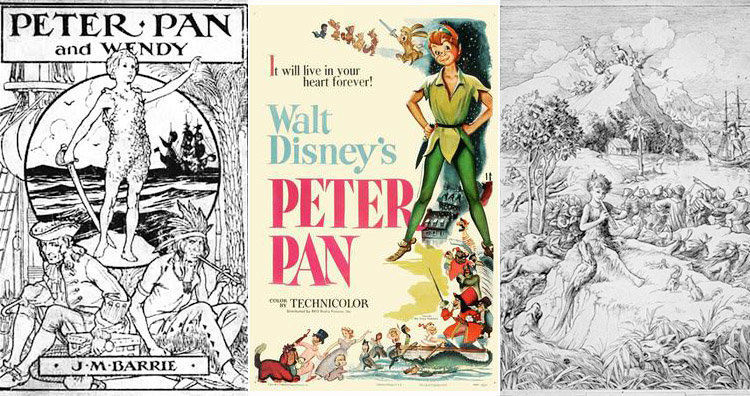
10. Peter Pan murdered some of the Lost Boys when they started growing old.
Peter Pan was originally a play that premiered in 1904, and the playwright also turned the story into a novel that was released in 1911. In that version of the story, it’s implied that Peter would sometimes kill the Lost Boys if they grew too old. In the novel, staying in Neverland only slowed down the aging process, it didn’t completely stop it.
“The boys on the island vary, of course, in numbers as they get killed and so on; and when they seem to be growing up, which is against the rules, Peter thins them out.”
The story also vaguely implies that Peter would disfigure the Lost Boys to get them to fit into their hideouts inside hollow trees.
“You simply must fit…but if you are bumpy in awkward places or the only available tree is an odd shape, Peter does some things to you, and after that, you fit.”
But this didn’t mean that Peter Pan was evil. Instead, he was depicted as an innocent character that couldn’t understand the consequences of his actions. In order to stay childlike, Peter Pan had to always live in the moment. He would do whatever occurred to him at the time and forget about it immediately afterward. In this way, the story showed how it’s important to eventually grow up. (1,2)
Most people may think conspiracy theories are not true but only rumors. Nobody can blame them for this. Moreover, there have been such disturbing and horrible incidents that it is normal to consider them as just a theory. But, as time passes by, some theories turn out to be actually true thanks to the evidence from whistleblowers, responsible politicians, and investigative journalists. Although most conspiracy theories are still unproven, some of them have been proven with documents and testimonials. Here we have documented ten conspiracy theories that turned out to be true.
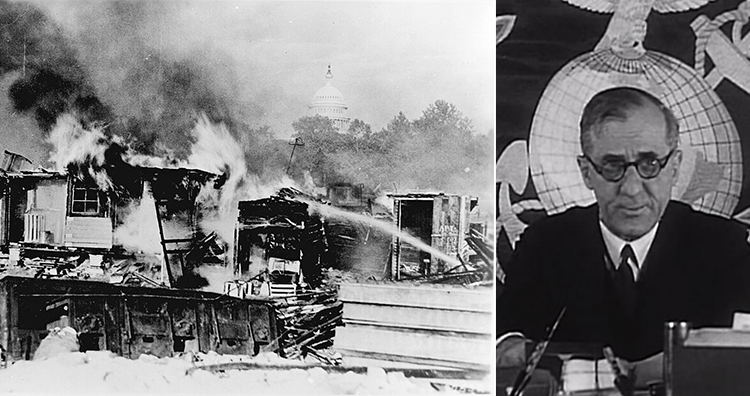
1. The Business Plot, aka The White House Coup
In 1933, a group of America’s wealthiest businessmen and powerbrokers including the grandfather of George W. Bush, Prescott Bush, planned to stage a coup against then-president Franklin Roosevelt to change the regime. One year later, a retired Marine Corps Major General, Smedley Butler, revealed the plot.
The Business Plot, aka The White House Coup, was a political conspiracy in 1933 in the US. The purpose of the alleged conspiracy was to replace the Roosevelt administration with a fascist dictatorship. A coalition of many influential billionaires and power brokers led by Prescott Bush, the grandfather of the former president George W. Bush, planned the coup. The reason behind this attempt was the policies of the Roosevelt administration towards the business world. The owners of some big corporations like General Motors, Goodyear, Chase Bank, and Heinz thought the government would destroy private enterprise. Thus, they wanted to bring a business-friendly regime so that they could preserve their power.
However, the coup plan came to light when Smedley Butler, a retired Marine Corps Major General, alerted the authorities in Washington D.C. of the conspiracy. According to his statement, some mysterious bankers and businessmen approached him and asked him to command an army of veterans who fought in WWI in order to stage a coup and overthrow the democratically-elected president, Franklin Delano Roosevelt. Butler was a popular military figure then, and he also had influence over the veterans. That’s why they chose him. A committee investigated the allegations and declared that some Wall Street elites were involved in the conspiracy, but, nobody was charged.(1,2,3)
2. 20 July Plot
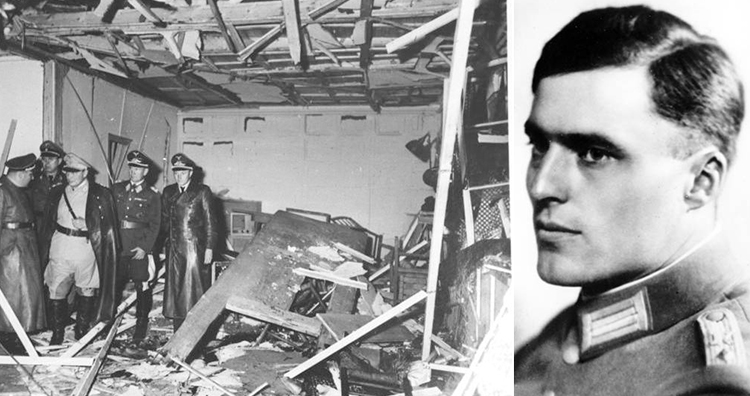
In 1944, a group of German officers tried to kill Adolf Hitler in order to take the control of the armed forces and Germany in order to finish the war and make peace with Allies and other countries. Although they executed the plan, they couldn’t achieve their goal.
On 20 July 1944, Colonel Claus von Stauffenberg and some other high-ranking German officers, like Generals Friedrich Olbricht and Henning von Tresckow, attempted to kill Adolf Hitler. They were going to take control of Germany, disarm the SS soldiers, and arrest all Nazi leaders. The goal of the plot was to eliminate Nazis and make peace with Allied Forces as soon as possible. The German officers who were involved in this plot wanted to show the world that not all Germans were like Nazis.
Stauffenberg joined a military conference with Adolf Hitler on 20 July with a bomb in his briefcase. He put the briefcase under the table and left the room after making an excuse. After he left the room, the bomb exploded, but Hitler managed to survive. As a result of the failed assassination attempt and the intended coup, the Gestapo, the secret police of Nazi Germany, arrested about 7,000 people and executed 4,980 of them.(1,2,3)
3. Operation Mockingbird
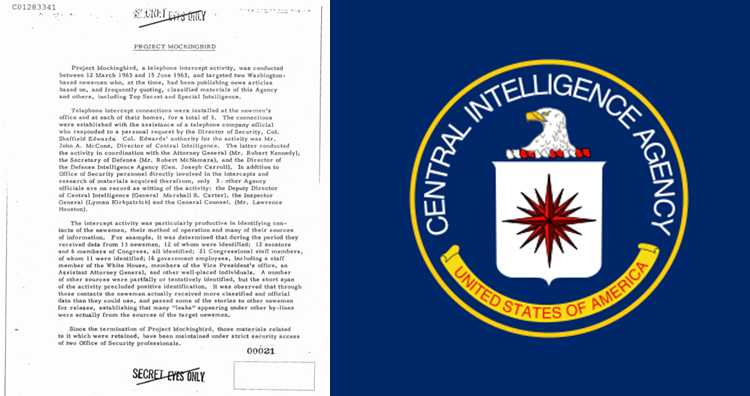
The CIA tried to manipulate the media in the US. Starting from the 1950s, the CIA implemented an operation with the aim of controlling major news media like Time, NBC, etc., and well-known journalists for propaganda purposes during the Cold War. The documents about the operation were declassified in 2007.
The CIA executed a covert operation in order to manipulate, control, and use the domestic media during the Cold War. The name of the operation was Operation Mockingbird, and it included lots of major media corporations and celebrated journalists. The operation was created by the Office of Policy Coordination, a unit for covert operations, and its first director Frank Wisner, a Wall Street lawyer. According to Deborah Davis who wrote about the operation in 1979, Operation Mockingbird was a response to the International Organization of Journalists which was a communist organization and funded by the Russians. The usual method followed in the operation was to place reports from the CIA-provided intelligence with cooperating reporters. Then, those reports would be promoted by the recipient reporters, and thus, they would be mentioned throughout the media.
Frank Wisner recruited Phillip Graham from the Washington Post to help the CIA run the operation within the industry. Graham also recruited lots of people then. According to Deborah Davis, “By the early 1950s, Wisner ‘owned’ respected members of The New York Times, Newsweek, CBS, and other communications vehicles.” As well as the New York Times and CBS, the CIA had influence over ABC, NBC, Reuters, the Associated Press, United Press International, and many others. Also, the CIA had relationships with many respected journalists such as Joseph Alsop and Ben Bradlee. The operation was revealed in 2007 when the documents about it were made public.(1,2)
4. Big Brother Conspiracy
The US government tracked and spied on people through their electronic devices. This fact came to light when Edward Snowden, a former NSA contractor, leaked the proof in 2013.
The Big Brother conspiracy was a mass surveillance of people by the National Security Agency (NSA) and the US government. A former NSA/CIA contractor, Edward Snowden, made all documents public about the global surveillance. According to those documents, the NSA conducted a global surveillance program named Prism starting from 2007. Within this project, the agency tracked the internet traffic of major internet corporations like Google, Apple, Facebook, Yahoo, Microsoft, etc. Also, the documents showed that the NSA made Verizon hand over all its telephone records on a daily basis.
After going to Hong Kong, Snowden stated that the NSA had conducted 61,000 hacking operations throughout the world. Germany, Brazil, the UK, Mexico, and Colombia were some of those countries. Apart from the US and other countries, the NSA also spied on the embassies of 38 countries like Japan, India, France, and Italy. After leaking the documents, Snowden was accused of treason, but he couldn’t be captured as he had fled the country previously.(1,2)
5. Nayirah False Testimony
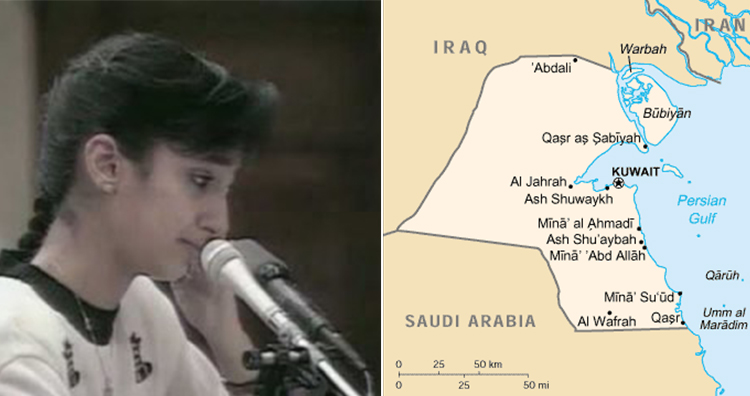
Nayirah said that she had witnessed Iraqi soldiers killing Kuwaiti babies after Iraq’s invasion of Kuwait. The purpose of the testimony was to justify the support of the US for Kuwait during the Gulf War in 1990. Two years later, when her last name was revealed, it was understood that she was the daughter of the Kuwaiti ambassador to the US.
On 10 October 1990, a 15-year-old Kuwaiti girl named Nayirah gave a testimony before the Congressional Human Rights Caucus. At that time, Nayirah only told her first name, and her last name was kept a secret. She stated that she had seen Iraqi soldiers killing babies in a hospital after the invasion of Kuwait. The media gave wide publicity to her statement then. Furthermore, most senators and the president of the time, George H. W. Bush, cited Nayirah’s testimony many times while explaining their reason why they supported Kuwait in the Gulf War.
Two years later, the last name of Nayirah was revealed. It was al-Sabah, and she was the daughter of the Kuwaiti ambassador to the US, Saud al-Sabah. Although cited numerous times by the president, her testimony had never been verified. Then, it was understood that it was false and arranged by a US public relations firm, Hill & Knowlton. The firm had organized Nayirah’s testimony as part of the public relations campaign of the Citizens for a Free Kuwait Project supported by the Kuwaiti government.(1,2)
6. Bat Bombs
During the WWII, the US government worked on an experimental weapon often called “bat bombs” to destroy Japan cities without causing US casualties. After a three-year-effort and $2 million, the government canceled the project in 1945.
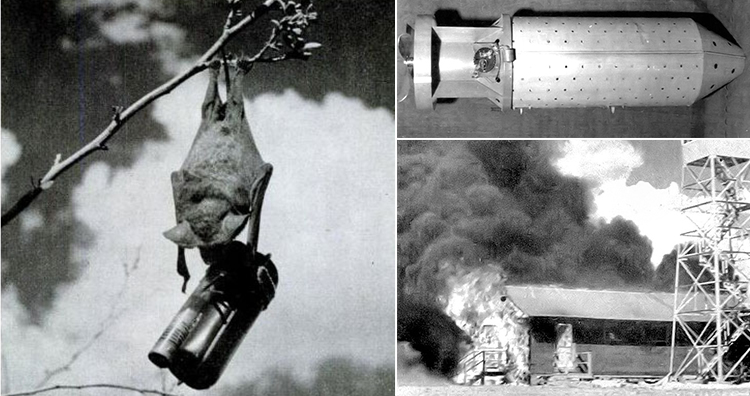
In 1942, Dr. Lytle S. Adams, a dentist and a friend of First Lady Eleanor Roosevelt, came up with an interesting idea after the Pearl Harbor attack. He had studied bats which could fly long distances, withstand high altitudes, and carry heavy loads. He also knew the Japanese buildings were mostly made of wood and other flammable materials. Therefore, he thought little bombs attached to the bats could rain fire on Japanese cities. The president of the time, Franklin Roosevelt, approved the idea too.
The official name of the project was Project X-Ray. Adams and a team of scientists started working on the bat bombs. The plan was to inject copper chloride into the side cartridge and tie the bomb to the bat’s chest. Then, they would load the bats into trays, and then the trays into a bomb. Then, a team would transport the bats in a plane, and when reached target locations, they would drop the bombs. The US army conducted many tests, and some were successful while some others were not. Also, the tests showed that the bat bombs were much more effective than regular bombs. They would provide 3,625 to 4,748 fires per bomb, whereas the number was between 167 and 400 for regular bombs. The US government canceled the project in 1944 in order to redirect the resources to the atomic bomb.(1,2)
7. The Enterprise: The Secret Government
There had been a secret government above the law in the US for a long time. This clique manipulated world politics, sold guns, funded covert operations, and overthrew democratically-elected officials. A documentary on PBS in 1987 revealed this group.
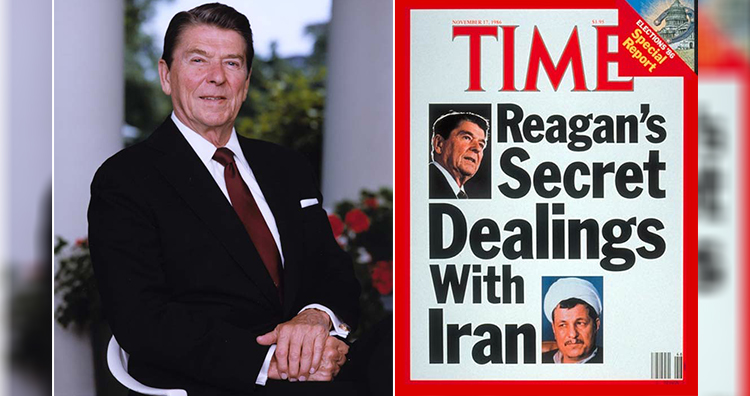
The US government established a secret organization which had abused US laws for a long time. This was a part of a project called “The Enterprise” created by the White House. It was a group of companies gathered to control the covert operations and conceal the involvement of the US government. Along with the CIA, this secret organization conducted a series of secret operations in Cuba, Nicaragua, Guatemala, Iran, and Vietnam. The most well-known operation the secret government involved in was the Iran-Contra affair, where then-president, Ronald Regan, secretly helped to sell weapons to Iran to support a terrorist group called “The Contras”.
This secret organization sold weapons to terror groups in some other countries causing the death of thousands. Also, the organization had manipulated the world politics with covert operations worldwide. The group did everything in the name of fighting communism and for the national security interests of the US. The organization’s ability to practice this power with impunity was thanks to the National Security Act of 1947. In 1987, a documentary by Bill Moyer revealed the secret organization. Bill Moyer revealed both the history and secret objectives of the group by interviewing respected intelligence, military, and government insiders.(source)
8. The CIA’s Heart Attack Gun
The CIA created a gun that could give an immediate heart attack to a person when targeted, and it would leave no trace behind. The gun was made public in 1975 during the Church Committee hearings.
The CIA developed a poison that could cause an immediate heart attack. But, in order to use this on targets, the agency needed a practical delivery mechanism. That’s why the poison was frozen into the form of a dart that could be used with a pistol. Finally, the CIA managed to make a heart attack gun. The pistol would shoot the icy projectile with a speed that could go through the clothes of targets. Then, the poison would melt into the body and cause an immediate heart attack. One of the most prominent features of this weapon was that it wouldn’t leave any trace of poison. In other words, the death of victims would look natural. Its existence came to light during the Church Committee hearings in 1975. Also, a former CIA employee, Mary Embree, confirmed the existence of the heart attack gun in an interview in 1998.(1,2)
9. The United Fruit Company
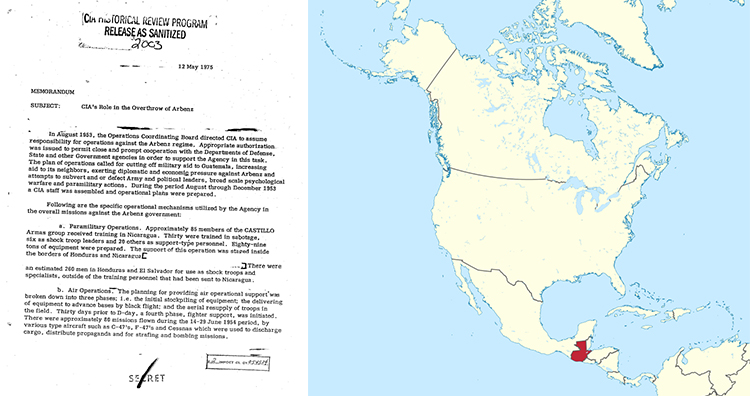
The United Fruit Company had great power in Guatemala in terms of the banana trade. But, when their power was challenged by the first democratically-elected president of the country, the CIA carried out a covert operation and backed a coup in Guatemala in 1954 in order to ensure the power of the company. The truth came to light when the Operation PBSuccess was declassified in 1994.
The United Fruit Company (UFC) was the world’s largest banana exporter as of 1900 and had a domination over the banana trade in Guatemala. The company was very powerful in Guatemala and had control of railroads, communication systems, and docks. The UFC had a capital of $215 million in 1930 and had been one of the biggest employers for several years in Guatemala. Then-president of Guatemala, Jorge Ubico, was favorable to the UFC and made things easy for it. The general policies of Ubico led to an uprising in 1944, and he had to flee the country. The next several years were better than the times of Ubico, but still, there were many problems in the country.
After a largely free election in Guatemala, Jacobo Arbenz became the president in 1950. Then, he implemented an agrarian reform bill named Decree 900. According to this reform, the government would expropriate the uncultivated lands of the landholders who had more than 673 acres. This meant the lands of the UFC were in danger since only 15% of their land (550,000 acres) was cultivated. The UFC intensively objected to the decision of the government and asked for the help of the US. The US government authorized the CIA to conduct a covert operation named Operation PBSuccess. Eventually, the CIA supported a coup in Guatemala in order to ensure the power of the UFC. President Arbenz had to resign at the end of the coup. The involvement of the CIA was revealed when the documents about the operation were revealed in 1994.(1,2)
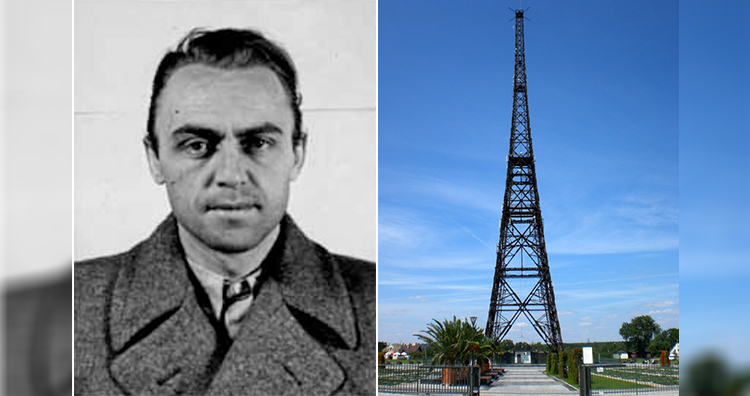
10. Gleiwitz Incident
The Gleiwitz Incident was a false flag operation by Germany in 1939 to invade Poland. The German soldiers posed as Polish soldiers and attacked a German radio station in Gleiwitz. An SS soldier revealed the details of the incident during the Nurnberg Trials in 1946.
On 31 August 1939, Nazi Germany conducted a false flag operation. Some German soldiers dressed in Polish uniforms attacked a German radio station to justify the invasion of Poland. After seizing the station, they broadcasted an anti-German message in the Polish language. They even brought some prisoners and killed them there in order to make the attack more convincing. Also, the Germans didn’t allow the US or any other country to investigate the incident in detail. The name of the whole operation was “Grossmutter gestorben” (“Grandmother died”). One day after the incident, Germany invaded Poland and initiated the WWII in Europe. An SS soldier, Alfred Naujocks, confessed to the crime and revealed the details about the operation at the Nurnberg trials. He testified that he organized the Gleiwitz incident and led the team under orders from the chief of the Gestapo.(1,2,3)
Templatesyard is a blogger resources site is a provider of high quality blogger template with premium looking layout and robust design. The main mission of templatesyard is to provide the best quality blogger templates which are professionally designed and perfectlly seo optimized to deliver best result for your blog.









 Hello, my name is Jack Sparrow. I'm a 50 year old self-employed Pirate from the Caribbean.


_02.jpg)


.jpg)


#/media/File:PeterpanRKO.jpg)

Socialize