prove: Mysterious #footer { border-top:1px dotted #999999; clear:both; margin:0 auto; }

Breaking

Home Top Ad

Responsive Ads Here

Post Top Ad

Responsive Ads Here
Showing posts with label Mysterious. Show all posts

Saturday, February 24, 2018

Astronaut Kept Space Treasure Secret From NASA Until His Deathbed

According to NASA’s biographical data, Gordon Cooper, who was an astronaut with NASA, was selected as a Mercury astronaut in 1959. On May 15-16, in 1963, Cooper piloted the Faith 7 spacecraft on a 22-orbit mission. Cooper also served as a command pilot of the 8-day 120 revolution Gemini mission which started on August 21, 1965. It was during that flight where he and fellow astronaut Charles Conrad established a new space endurance record. Cooper also became the first man to make two orbital flights. Cooper died in 2004 due to heart failure but revealed a space treasure secret that he had been keeping from NASA for many years, according to CBC News.


winnatyre
CBC News reports that Cooper was instructed to find potential nuclear threats by pinpointing magnetic anomalies while he was piloting the Faith 7 spacecraft for the Mercury-Atlas-9 expedition. Unfortunately, the anomalies that he was recording were much too small to be nuclear devices.
According to Darrel Miklos, who is a professional treasure hunter, he says that Cooper knew right away that they had to be shipwrecks because they were smaller and in the middle of nowhere–they were found in very isolated regions throughout the Atlantic, Caribbean and Gulf of Mexico, he told the As It Happens host Carol Off.
CBC News reports that Cooper recorded these coordinates in a notebook, and when he finally returned to earth; he started mapping them out on a sea chart. Miklos calls this “a treasure map from space.” These coordinates consumed most of Cooper’s life, CBC News reports. He compiled research about famous shipwrecks that matched coordinates on his map. Cooper’s findings led him to believe that the shipwrecks could be from the colonial period. During this period, ships would constantly travel to Europe from America, carrying treasures full of gold and silver.
ZackFrank/shutterstock.com
According to Miklos, a lot of that treasure in that period never made it back. He also added that some of it could be from Christopher Columbus’ lost fleet. According to the National Geographic, in 1494, Christopher Columbus made his second journey to the Americas. He took more ships and more men because he wanted to create the first European colony in the New World. Unfortunately, in just a few short years, his settlement would perish. Almost one-fifth of his inhabitants were dead and at least six of his ships were sunk at the bay.
EverettHistorical/shutterstock.com
Cooper had plans to organize an expedition to find these buried treasures, but as I mentioned earlier, he passed away in 2004 due to heart failure before he could finish his work. But before he passed away, he did what any good adventurer would do; pass on his knowledge to another adventurer. Cooper gave Miklos the map and research with it.
Miklos says that he hopes that Cooper’s map and research can help bring light to the shipwrecks that have yet to be discovered. He wants to tell the stories of these shipwrecks and show the world and share it with host countries that allow him and his team to conduct research and survey their countries.
RichardWhitcombe/shutterstock.com

Wednesday, February 21, 2018

Viking Sword Over 1,100 Old Discovered by Reindeer Hunters 5,400 Feet Above Sea Level

Everyone’s favorite Norse seafarers, the Vikings, originated from Sweden, Denmark, and Norway. During what became known as the “Viking Age,” between the late 8th to late 11th centuries, they sailed and raided parts of Europe and were considered brutal raiders. The weapons they carried were not just meant for warfare but were also status symbols with hilts often decorated with silver, copper, and bronze. They were also sacred objects that helped them reach Valhalla after an honorable death. One such Viking sword was recently discovered at a most unlikely location.

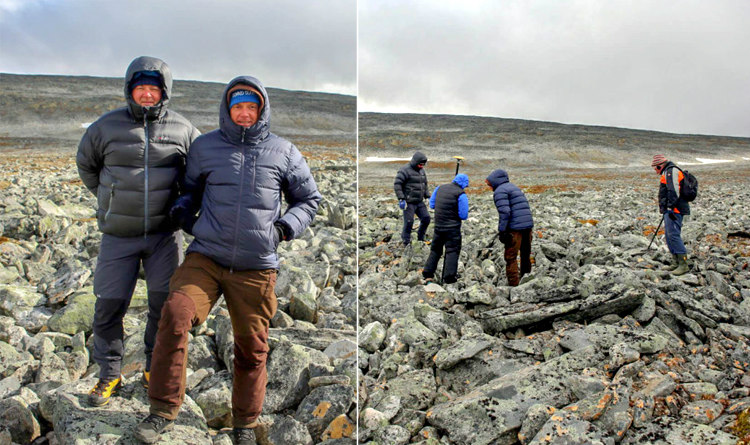
The Viking sword was found by Einar Åmbakk, a reindeer hunter, on top of a remote mountain in southern Norway at 1,640 meters (5,381 feet) above sea level. The sword dates back to circa 840-950 CE. 


Image Source: Einar Åmbakk

Åmbakk found the sword in a scree-covered area with its hilt buried between a few stones and half of its blade sticking up. Though there are traces of permafrost movement in the area, experts from Oppland’s Glacier Archaeology Program, a collaboration between Oppland County Council and University of Oslo’s Museum of Cultural History, believe it unlikely that the sword reappeared because of the movement as there were no scratches or bends on the sword. This meant that the sword was probably found in its original position or has slid only slightly.

Following the discovery, a team went to the location to look for further finds, but none were found. Archaeologists believe they cannot come up with a plausible explanation why the sword was in such an isolated and high altitude location. 


Glacier Archaeology Program Team
Image Source: Espen Finstad

The survey conducted by the archaeology experts covered a distance of 20 meters from the spot where the sword was found. Not only did they not find anything associated with the sword, but there was also no indication of any burial or sacrifice. It seemed unlikely that it was simply lost or left there and was not recovered. One suggestion was that whoever left the sword there must have found himself lost, perhaps in a snow blizzard. As no remains were found nearby, the experts hoped that if the Viking died a couple of hundred meters further east where there are ice patches, they could have had their first Norwegian Ötzi.

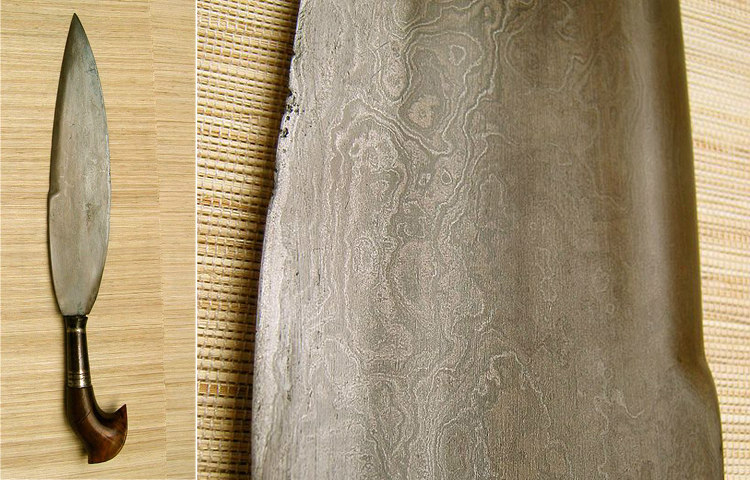
Viking swords were made of a state-of-the-art metal known as “crucible steel” which has very little slag and a high carbon content. The metal quality is astonishing to archaeologists as it required technology and temperatures that weren’t possible until 800 years later. 


Pattern-Welding
Image Source: wikipedia

It is believed the Vikings obtained the crucible steel from the Central and South Asia via the trade route that connected Scandinavia and northern Iran. One way of removing slag from ore is to pound it out, though it is not very effective. To get pure iron, modern metalworkers melt the ore at 3,000oF (1,650oC) and add carbon to increase its strength. Among the many Viking swords found by archaeologists, over 170 of them were made of crucible steel by Ulfberht using a technique known as pattern-welding. Damascus steel is a similar metal that was made in India during the Middle Ages.

Surprisingly, the sword is remarkably well-preserved except for some rust on the surface and the organic handle that disintegrated. High-quality iron, cold conditions, and low humidity are believed to have been the reason. 


According to Lars Pilø, the editor of Secrets of Ice, this wasn’t the first time a well-preserved, iron-made weapon was found. As the glaciers and ice patches recede due to climate change, more and more artifacts are being found in Oppland County. More than half of them, including isolated finds of well-preserved iron arrowheads, date as far back as 6,000 years. Two years ago, hiker Goran Olsen found a Viking sword made circa 750 CE in the Norwegian mountain village of Haukeli, around 150 miles from Oslo.
[sources: SecretsoftheIce, NationalGeographic, History]

Tuesday, February 20, 2018

“Traub”, the Rare Motorcycle from 1916, has Engine Technology way Ahead of its Time and Still Runs

Imagine accidentally stumbling upon something so rare that there is just one of its kind! And imagine that thing to be a motorcycle. How lucky would you be? This is exactly what happened with the rarest of all motorcycles – the Traub motorcycle. Not a known name in the world of motorcycle manufacturing, the Traub was discovered in 1968. Even though major parts of the motorcycle were hand-built, some of the off-the-shelf parts used have helped to determine the time of the creation of the motorcycle to be around 1916.

The 1916 Traub motorcycle was discovered hidden within the walls of a Chicago apartment in 1968. Only one such motorcycle exists in the world. Even though it remained hidden for more than 50 years, surprisingly, it was still in running condition.


The Traub Motorcycle
Image Source: Wheels Through Time

In 1968, a plumber was carrying out renovation of an old apartment building in Chicago. He tore down a brick wall and was surprised to discover an old motorcycle hidden behind it. The motorcycle had the name “Traub” written on its tank.
As soon as the discovery was made, the original owners of the building were tracked down. They revealed that years ago, their son had stolen this motorcycle, most probably from the original owner, before going away to fight in the World War I. Perhaps the son hid the motorcycle in the wall to safeguard it until he returned from the war. But, unfortunately, he was killed in action and never returned leaving the motorcycle hidden away from the world for over 50 years.

Soon after its discovery, the motorcycle went through the hands of a number of owners, finally landing with Dale Walksler, the founder of Wheels Through Time Museum.


Wheels Through Time, Dale Walksler
Image Source: Wheels Through Time, RoadRunner

When the Traub motorcycle was first discovered in 1968, it was acquired by a Chicago motorcycle dealer by the name of Torello Tacchi. He traded a $700 Suzuki in exchange for the motorcycle and worked on it to bring it to perfect working condition. The motorcycle remained in his possession for about 10 years and was later purchased by Bud Ekins, the stuntman for the famous star Steve McQueen. Ekins again sold it to Richard Morris, a bike collector from California.
Finally, the Traub made its way to Dale Walksler who is the founder of the famous Wheels Through Time Museum. The museum has continued to be the home for the rare bike since its purchase by Walksler in 1990. Amazingly, the 101-year-old Traub still runs perfectly, and Walksler even up to today enjoys an occasional ride.

The motorcycle is well-known not only because it’s the only one of its kind but because of its high-quality craftsmanship. Experts have called it one of the most advanced machines of the early 20th century.


The 1916 Traub is the only one of its kind. Sure there have been numerous classical bikes throughout history, but none can surpass the complex engineering of the Traub. The machinery and the technique used to build the motorcycle was well ahead of its time. Most of the parts were hand-made with gapless cast iron rings. Also, the parts that were found on the motorcycle were never seen on any other bikes throughout history. It is as if the parts were specifically made for this machine only.
The 80cc, V-twin engine of the Tarub is hand built, sand cast, and is one of its kind. The Traub was equipped with a three-speed transmission which experts believe to be one of the first of its kind. The dual-acting brake system is also unique and never seen on any bikes of that era.

Historians and experts have been speculating for a long time on who the creator of the Traub might have been. The most promising candidate has been Gottlieb Richard Traub.


Richard Traub Motorcycle Shop
Image Source: RumbleOn

Historians have been frustrated for years over the identity of the Traub’s creator. Even though many have narrowed down the creator to a man named Gottlieb Richard Traub, there is no definitive proof. Gottlieb Richard Traub was a German born in America. In July 1907, Richard Traub wrote a letter to the editor of the Motorcycle Illustrated. In the letter, he mentioned in detail about a four-horsepower motorcycle that he built at home. The specifications of the motorcycle that he built were similar to that of the 1916 Traub. Moreover, he also owned a shop known as “Richard Traub Motorcycle Shop.” Above, you can see an image of the shop. In the image, the motorcycle to the right bears a strong resemblance to the 1916 Traub.
It is not clear when or where this photo was taken. But reports suggest that Richard Traub used to work out of a garage attached to his home. From the letter that Richard Traub sent to Motorcycle Illustrated, it was discovered that his home was located at Paulina Street, Chicago. Moreover, the apartment from which the motorcycle was retrieved in 1968 is located close to this particular street. This strongly suggests that there is a high possibility that Gottlieb Richard Traub might actually have been the creator of this rare and amazing motorcycle, even though there is no solid proof.
[sources: 1, 2, 3]

The Mysterious case of the Devil’s Kettle Falls where Half a river seems to disappear forever!

At the Devil’s Kettle Falls, the Brule river forks into two. While one part of the river flows normally down to Lake Superior, the other part just vanishes into a deep pit. Now scientists believe they have solved the mystery. 

The Devil’s Kettle Falls is an unusual waterfall located in the Judge C. R. Magney State Park. The falls has a giant, deep hole that swallows half of the Brule River, and, until recently, no one had any idea where that half ended up.


Image Source: Wikipedia, Flickr

The Brule River flows through the Judge C. R. Magney State Park located in Minnesota. It makes a drop of 800 feet in a span of 8 miles creating several waterfalls. Among them lies the mysterious Devil’s Kettle Falls.
About one and a half mile from the Lake Superior, the river forks into two streams at the Devil’s Kettle due to the presence of a protruding rhyolite. While the right part of the river flows down normally and joins the Lake Superior, the left part of the river falls into a giant pit. You can see the pit in the image above.
Now logically, since the water needs to keep flowing, it has to come out somewhere. But for years, people have failed to figure out where exactly the water goes after it falls into the pit — that is until recently.

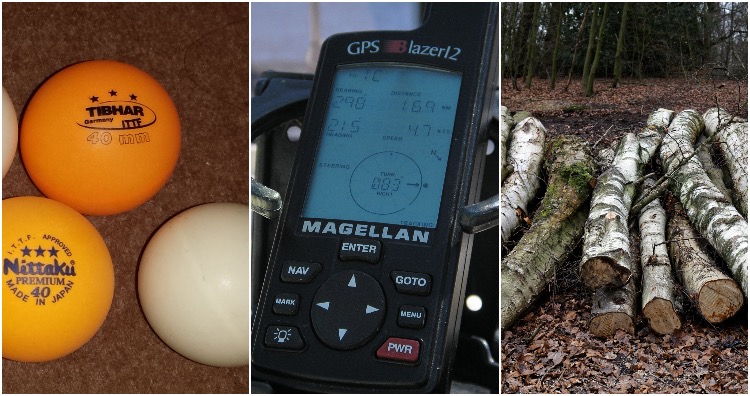
Over the years, researchers and many curious locals have poured items such as ping pong balls, tree logs, and apparently even a car into the hole and monitored the lake for the objects to emerge. So far, none of the objects have resurfaced.


Image Source: Wikimedia Commons, Wikimedia Commons, Wikimedia Commons

Thomas Hobbes rightly said that curiosity is the lust of the mind. People were so curious to find out where the river ends up that they have conducted numerous experiments. One of the most famous experiments included the pouring of numerous ping pong balls into the pit. A phone number was etched onto each ball with a message that if found, the person should call back and would get a reward. Not a single call came to claim the reward.
Other experiments involved the throwing of GPS trackers, logs, loose change, and twigs. Local legends also suggest that people have been known to throw televisions, refrigerators, and even a car into the hole. But the probability of bringing a car to the crest of the waterfall seems highly unlikely.

Many theories have come up to explain the mystery. Some believe that there might exist an underground river. Others believe in the existence of an ancient lava tube that carries the water directly to the floor of Lake Superior. Both theories have been dismissed.


The theory for the existence of underground river was dismissed by geologists because such geological formations take place in soft rock types, like limestone. The area around the Devil’s Kettle is built of much harder rock.
Moreover, the existence of a lava tube deep down the falls is unlikely because, in the hundreds of the exposed basalt beds formed by volcanic eruptions in Minnesota, no lava tubes were ever discovered.

In February 2017, the Minnesota Department of Natural Resources finally established that the disappearing water resurfaces in the stream below the waterfall.


Image Source: Wikipedia, Wikipedia

Finally, in February 2017, some light was shed into the mystery behind this unique waterfall. A team of hydrologists from the Minnesota Department of Natural Resources measured the flow rate of the water above Devil’s Kettle at 123 cubic feet per second. The water was flowing at 121 cubic feet per second hundreds of feet below the waterfall.
According to hydrologist Jeff Green, these rates are essentially the same and therefore, there is no loss of water below the kettle. This means that water is resurging in the stream from below.
To confirm their theory, researchers were planning to conduct a dye test wherein they would pour vegetable dye into the pit and monitor where the water resurfaces. But the researchers never came back as “there was not a significant scientific reason,” according to the park’s manager, Pete Mott.
As to the items that have disappeared when thrown into the pit, Green explains that due to the powerful recirculating currents, the items may have been disintegrated or held underwater until they resurface downstream at some time.[source: 1, 2, 3, 4]

Sunday, February 18, 2018

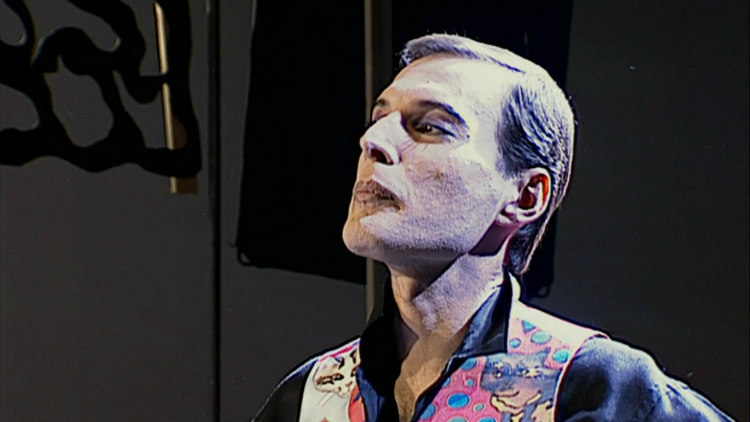
11 Lively Facts About Freddie Mercury You Probably Didn’t Know

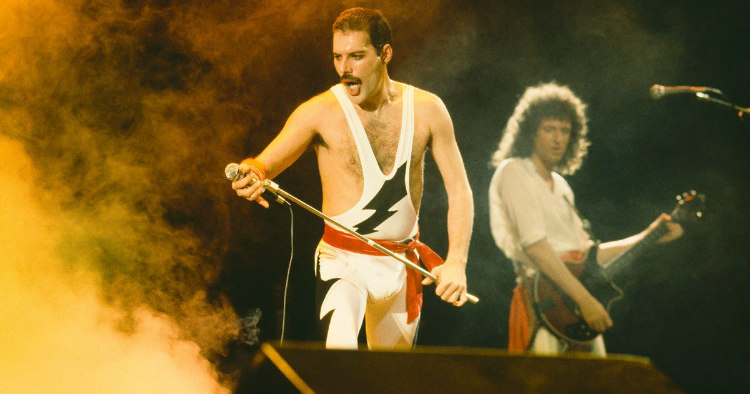
Freddie Mercury, born Farrokh Bulsara, was one of the most successful and much loved vocalists and songwriters worldwide. His songs and his energetic performances captured the hearts of many and his amazing voice spanned over a four-octave range. In 1970, along with guitarist Brian May and drummer Roger Tylor, he formed the band Queen which went on to become one of the greatest hits the world has ever seen. So, if you are feeling nostalgic about those good old days of Queen here are some facts about Freddie Mercury that we are sure you would enjoy reading.

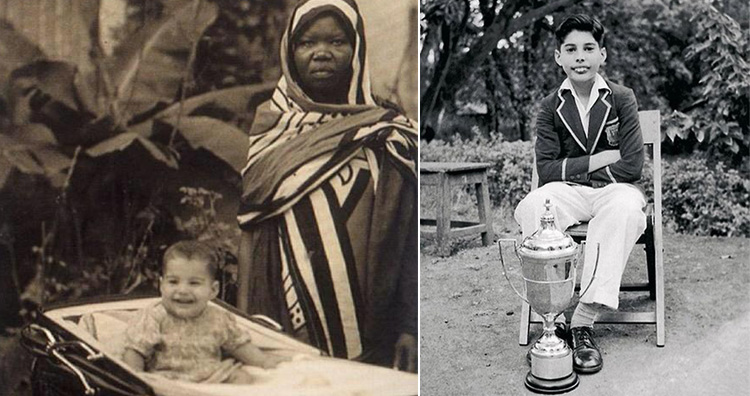
1. Freddie Mercury was born Farrokh Bulsara and raised in Zanzibar. He was a Zoroastrian. At the age of 8 his parents sent him to India to get a better education.


Freddie's Childhood
Image sources: imgur, reddit

Freddie Mercury was born on September 5, 1946, in the British protectorate of Sultanate of Zanzibar, East Africa, where his parents moved to so that his father could continue work as cashier at the British Colonial Office. His parents were Parsis from the Gujarat region, British India, and practiced Zoroastrian religion. Freddie started taking piano classes at the age of seven and was sent to study at St. Peter’s School in Panchgani near Bombay (now Mumbai). Music had been a very important part of his childhood and by the age of 12, he formed a school band called The Hectics playing a lot of rock and roll music from artists such as Cliff Richard and Little Richard.(source)

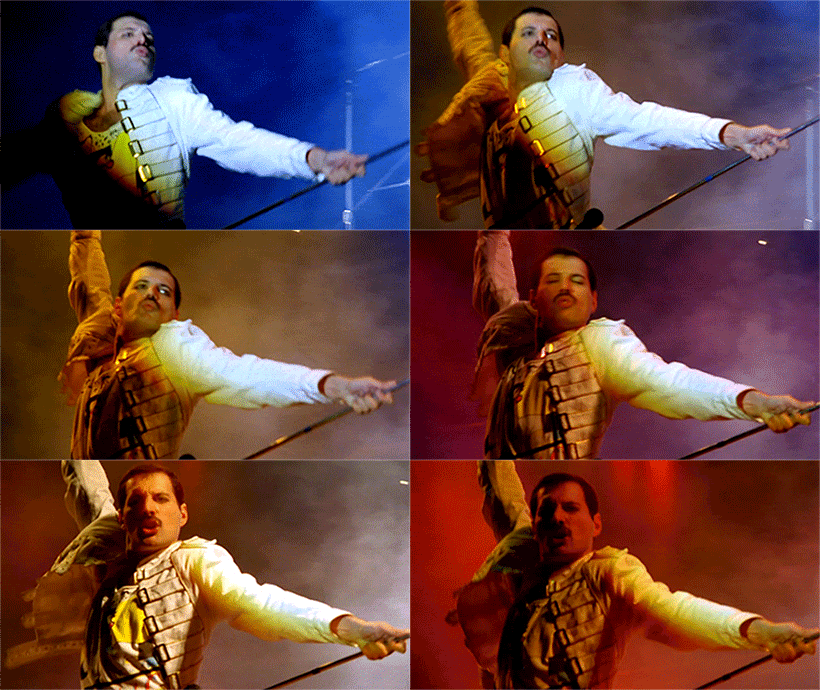
2. In 1974, a then-unknown Queen performed to a jeering Australian audience who wanted Aussie bands instead. After finishing, Freddie Mercury responded, “When we come back to Australia, Queen will be the biggest band in the world!” When they came back in 1976, they were at the top of the charts.


Freddie Mercury
Image Source: giphy

During the Sunbury Pop Festival that ran between January 25 and 28, 1974, Queen’s performance had upset the established local bands and promoters as it was first non-Australian performance in the festival. The local DJ who was acting as the MC introduced the band saying “Well, we’ve got another load of limey bastards tonight. They’re probably going to be useless, but let’s give them something to think about!” The band was also looked down upon as snobs because they brought their own crew and lighting rig, which was sabotaged by local roadies. Mercury made his statement as the crowd were jeering and indeed, when they returned to Australia in 1976, they were quite famous.(source)

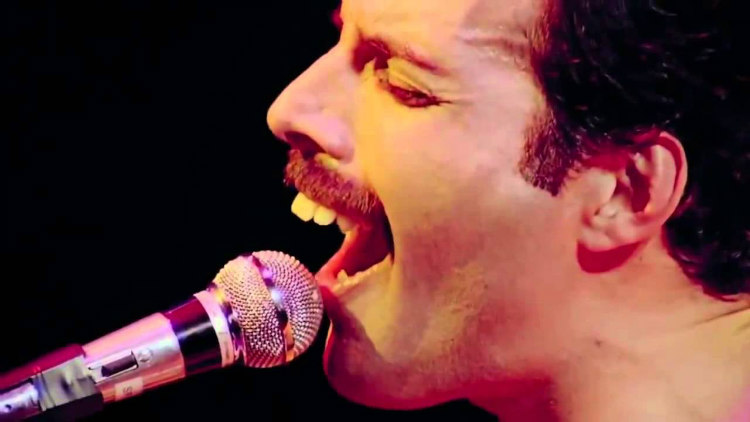
3. Freddie Mercury had an overbite which he did not want to get corrected because he was afraid it would affect his singing voice.


Freddie Mercury Overbite
Image Source: stevehoffman

It’s hard to miss Freddie Mercury’s one feature, apart from his good looks and great singing, that stands out – his teeth. The overbite was caused by four extra teeth that forced his incisors to look prominent. But he was worried that getting a corrective surgery to fix it might damage his voice and so he chose not to get it corrected.(source)

4. The a cappella introduction of Bohemia Rhapsody is a five-part harmony made entirely of multi track recordings of Freddie Mercury, not the whole band.


Though we see all the four members lip-syncing the intro, the B♭ major a cappella was song only by Freddie. Each voice was sung by him separately and put together to sound like chorus. Also after 14 seconds, when the grand piano enters, Mercury alternates his voice with the other vocal parts. If you are listening in a stereo, the words “little high” come from the left speaker and the words “little low” come from the right. The contrasting chords during “easy come, easy go” give it a dream-like atmosphere.(source)

5. During a concert in the 70s, someone in the audience shouted “You fucking poof” to Freddie Mercury. Freddie responded by demanding the crew to turn the spotlight on the crowd to find him and said, “Say it again, darling.”


Freddie MercuryFreddie Mercury
Image Source: rollingstone

After realizing and coming to terms with his sexuality, he told his then-girlfriend, Mary Austin, about it, who was very supportive, and stayed close to her for the rest of his life, also employing her as his personal secretary and adviser. According to Austin, since then Freddie never felt the need to explain himself to anyone. He also didn’t tolerate cheap defamation as could be seen in the incident mentioned above.(source)

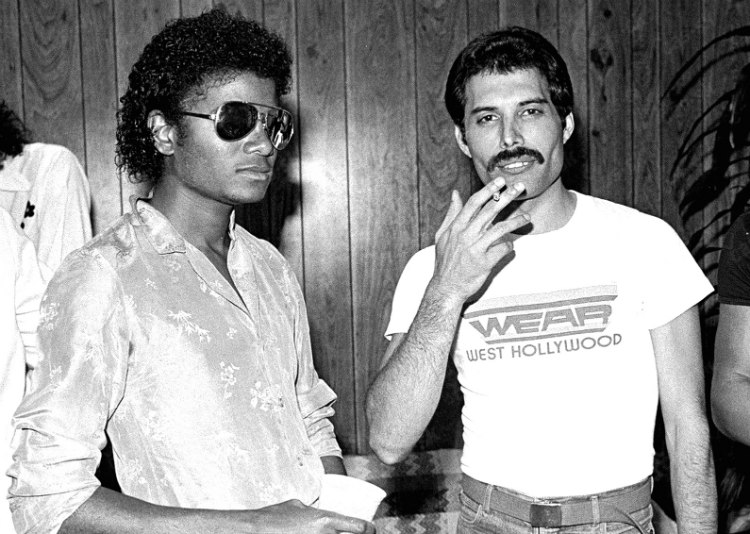
6. Michael Jackson and Freddie Mercury collaborated in the 80s to make three tracks. But, Freddie broke it off because Jackson insisted on bringing his pet llama to the recording studio. 


Freddie Mercury and Michael Jackson
Image Source: okayplayer

The three tracks named State of Shock, Victory, and There Must Be More To Life Than This, written by the duo were recorded in Jackson’s home studio in Encino, California in 1983. However, the recording was never finished because of the conflicts between the two. According to Jim Beach, Queen’s former manager, Freddie called him and said, “Can you get over here? You’ve got to get me out of here, I’m recording with a llama.” Also, Jackson not approving of Mercury using too much cocaine in his living room soured their relationship.(source)

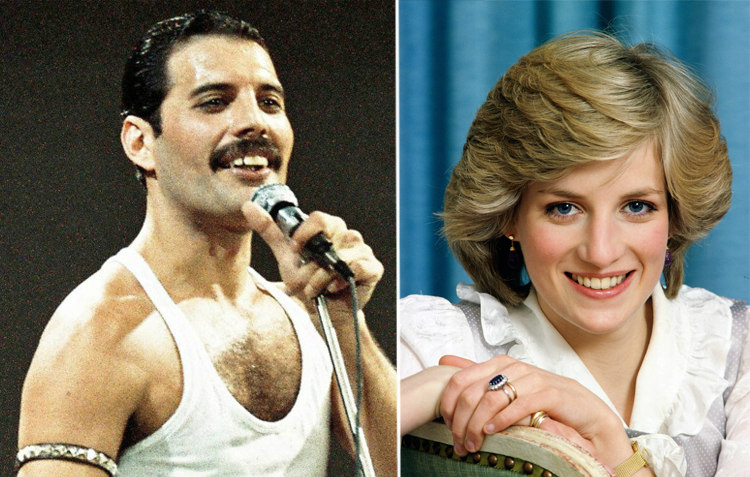
7. Freddie Mercury once helped dress Princess Diana up as a male model to sneak her into a gay bar. 


Freddie Mercury and Princess Diana
Image Source: vulture, closerweekly

According to comedian Cleo Rocos, she, Princess Diana, Freddie Mercury and comedian Kenny Everett were drinking at Everett’s home when they decided to go out to a bar. So, they dressed Diana up in an army jacket, a leather cap to conceal her hair and dark aviator sunglasses to pass her off as an eccentrically dressed gay male model. Though several people greeted them, none of them recognized Diana in those clothes.(source)

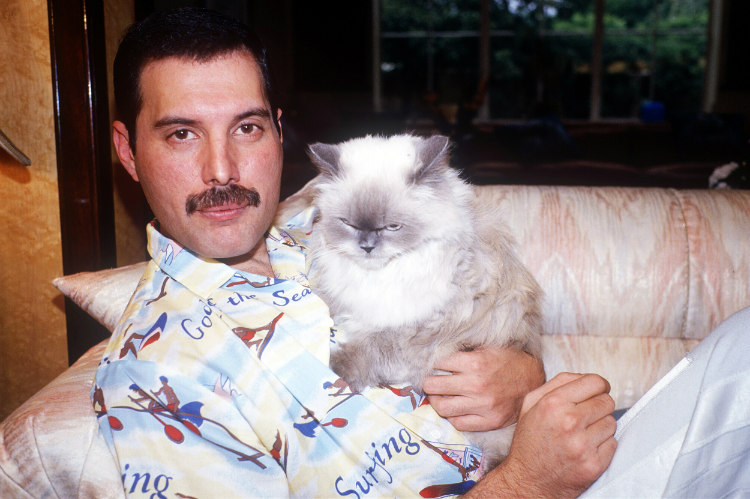
8. In 1985, Freddie Mercury released a solo album, Mr. Bad Guy, that he dedicated “to my cat Jerry—also Tom, Oscar and Tiffany, and all the cat lovers across the universe—screw everybody else”


Freddie Mercury and His Cat
Image Source: 4fun

Mr. Bad Guy is Freddie’s debut solo album that he made when Queen was on a break from recordings. The album has eleven songs, all written by him. The songs have influences ranging from disco to dance music, which is a contrast to the typical rock-oriented songs from Queen. The album was originally supposed to be the recordings he did with Michael Jackson, from which he later dropped out. It took him two years to record the album as he was also taking care of his band commitments.(source)

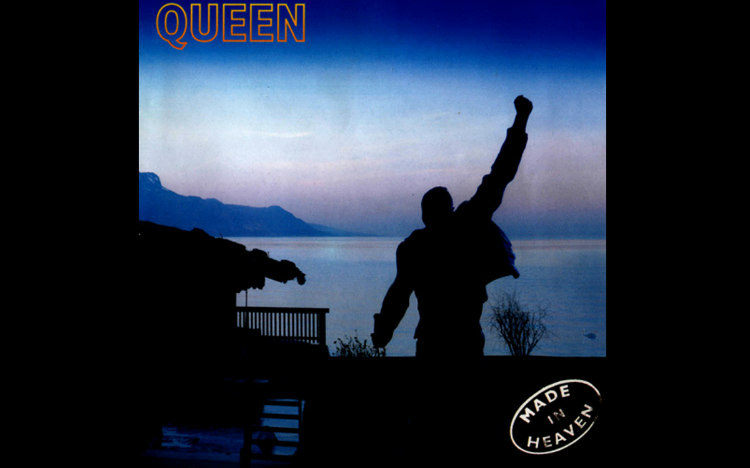
9. In May 1991, Freddie Mercury started recording for Mother Love, but upon reaching the final verse he told Brian May he wanted to “have a rest” and would return to finish it. He never made it back to the studio and May sang the last verse. 


Made in Heaven
Image Source: shakenstir

The song Mother Love from the album Made in Heaven was written by Mercury and Brian May, Queen’s lead guitarist. The song is Mercury’s last ever vocal performance, recorded in May between 13 and 16, 1991, 6 months before his death. The album was released on November 6, 1995, and was the final album containing original material featuring the band’s original members.(source)

10. Freddie Mercury spent his last months recording as many vocals as he could so that his band could finish them after his death. 


Freddie Mercury's Last Days
Image Source: emaze

After completing work on Innuendo in early 1991, Freddie recorded various songs, and those put to tape during this time primarily were A Winter’s Tale, Mother Love and another song that would eventually become You Don’t Fool Me. According to Brian May, Freddie was told by that time that he won’t be able to make it till the end of complete recording. So, every time he felt well enough to record, they get to the studio and get to work. After his death, the Freddie Mercury Tribute Concert for AIDS Awareness was held on April 20, 1992 and all the 72,000 tickets were sold out in just three hours of its announcement even though no performers were announced besides the remaining members of Queen.(1, 2)

11. It was Freddie Mercury’s last wish that Bohemian Rhapsody be reissued to raise money for AIDS charities. When the song was re-released, it topped the charts for the second time and was number 1 for five weeks. 


Freddie Mercury and Mercury Phoenix Trust
Image Source: mercuryphoenixtrust

Freddie Mercury wanted to create awareness and help find a cure. To that end he revealed to the public that he was HIV positive on November 23, 1991, hoping to raise the profile of AIDS. However, he died the very next day due to AIDS related bronchial pneumonia. Roger Taylor, Queen’s drummer, later during 1992 Brit Awards announced a tribute concert to raise money for Mercury Phoenix Trust set up in Freddie’s name to provide financial help to AIDS charities around the world.(source)

Friday, February 2, 2018

The Story Of Houston Is The Story Of Its Highways

The story of Houston is more than the history of a shipping channel, oil and gas or the space program. It’s also the story of the highways that link these industries with the people and resources that created growth. Houston highways also changed the layout of communities – relocating some neighborhoods and hemming in others.
A new book, ‘Power Moves,’ tells the story of the relocated neighborhoods together with the people and communities whose homes and businesses were built over. Author Kyle Shelton is also the director for strategic partnerships, and a fellow at Rice University’s Kinder Institute for Urban Research.
Shelton says Houston had one highway in 1950. “[Houston] was in the vanguard of cities that were inventing and building themselves at the time – that car-based growth [was] happening.” Shelton says. “Houston, along with Phoenix and Los Angeles and several other sunbelt cities, really grew around the transportation infrastructure they built in the early post World War II era.”
Though Shelton says the results of highway-centric development can be debated, it’s not fair to do so in hindsight.
“There are some really legitimate reasons to question how we made our decisions that are just about highways,” says Shelton. “[It isn’t fair to say that] in 1955 [planners] should have known that over-focusing on highways would lead to all these consequences.” Shelton says, “It is fair to say …that Houston and all these other cities focused on highways to the detriment of public transportation, bicycle infrastructure and pedestrian infrastructure.”
“Power Moves” describes not just how debates over highway construction grow out of urban and metropolitan politics. Shelton also describes highway building’s impact on individuals and neighborhoods.
“In the 1950s and 1960s…from the wealthier suburbs to lower-income communities, no one really had a lot of communication with public officials who were designing this,” says Shelton.
In the 1970s, federal law called for more public comment and slowed down the process of planning and building highway systems. “At this point there certainly never has been a perfect public engagement process,” he says.
“Moving up to today…the major projects we’re confronting now, in cities across the country, are projects that are being discussed and debated for decades,” Shelton says.
Public officials really need to explain why projects are needed, what the benefits are, and the public needs to communicate back.
“It’s too easy,” says Shelton “to dismiss people’s meaningful thoughts, if they don’t have the kind of technical basis to understand the project.”
Shelton says cities like Houston, that have emphasized highways, face challenges.
“It can’t be just highways or just public transportation,” he says. “Those two cannot be at loggerheads any more, If we want to be able to see a [transportation] system that works for everybody and gives people lots of options, [then] giving lots of different folks from lots of different neighborhoods the time and space to participate in that [planning and developing the system] is key.”

Comments system

[blogger][disqus][facebook]

Disqus Shortname

sigma2

Post Bottom Ad

Responsive Ads Here